It’s true. You don’t have to be a tree-hugger or a liberal or an “environmentalist” to care about the environment. You can be whoever you want to be with whatever political, religious, or social affiliation you choose and still care about the environment, even if it’s only just a little bit. We can all do something to help.
I hold NPR responsible for the title of this post as it was there that I first heard this theme used in an effort to gain supporters for the opposition of The Pebble Mine Project up here in Alaska and I thought it ingenious. You see, lots of folks up in these parts would rather die than be labeled a tree hugger, a liberal or an environmentalist. Knowing this, those in opposition to the Mine created an ad campaign trying to sell the idea that saying no to the Mine does not make you a tree hugger. Like I said, I thought this was very clever since it just seems that the two always go hand in hand, doesn’t it? On the one hand, if you care about the environment, then you are stereotyped as a tree hugging, liberal, hippy and on the other hand, if you care about the exploitation of natural resources, then….you get the idea. AND for the sake of this blog post, it doesn’t matter if you are for or against the mine, if you are liberal or conservative, if you are fat or thin, or tall or short, what matters is that you can be all of those things or none of those things and still care about the environment…even if it’s just a little bit.
Why all this crazy talk about the environment all of a sudden, you ask? No worries, I haven’t drunk the kool-aid and this blog is not going to morph into some personal social activism platform. I’ve been wanting to write this post ever since I saw the documentary, No Impact Man a few months ago. I thought it a good, interesting, enlightening, and thought-provoking movie and I simply want to spread the goodness around. Please take it or leave it as you see fit. It is completely up to you and what you think best.
I’ve pasted this blurb from his website which gives a quick overview of Colin Beavan and his idea as it stood back in 2007. The documentary follows his year-long project and, like I said, is quite thought-provoking. Here is the link to his blog if you are interested in learning more. http://noimpactman.typepad.com/blog/what-its-all-about.html It is surprising how many small things each of us can do to lessen our impact on the earth, things that really aren’t hard at all, just habit changing. Since watching the documentary and reading the blog and The No Impact Week in particular, I’ve made a host of small changes and am working my way toward adopting more as I’m able. Take a look if you like and let me know what you think.
From the No Impact Man blog.
“The blog is just launching this balmy February day of 2007—yippee!—but our no impact experiment has been going on for two and half months. So, just a little recap and update to let you know what you need to know to understand what is going on and where we’re at.
No Impact Man is my experiment with researching, developing and adopting a way of life for me and my little family—one wife, one toddler, one dog—to live in the heart of New York City while causing no net environmental impact. To do this, we will decrease the things we do that hurt the earth—make trash, cause carbon dioxide emissions, for example—and increase the things we do that help the earth—clean up the banks of the Hudson River, give money to charity, rescue sea birds, say.
In mathematical terms, in case you are an engineer or just a geek who likes math, we are trying to achieve an equilibrium that looks something like this:
Negative Impact + Positive Impact = Zero.
No net impact. Get it?
We’re taking a year to do this thing (starting the end of November, 2006) and it’s working in stages. Stage one was figuring out how to live without making garbage: no disposable products, no packaging, etc. Stage two was figuring out how to cause the least environmental impact with our food choices. Stage three is figuring out how to reduce our consumption to only what is necessary and how to do that sustainably. The whole thing gets harder and harder as we add each stage.
What will the future stages be? Who knows? I am no eco-expert. I am just a liberal schlub who got sick of not putting my money where my mouth was. In a way, the whole project is a protest against my highly-principled, lowly-actioned former self. I’m fumbling through, trying to do my best and doing the research as I go along. This blog is my attempt to tell you how it’s going.
That’s pretty much everything you need to know to understand this blog. But for more details on the design of No Impact Man, the book, the movie and all of that, see the posts on the left hand side under “What’s It’s All About.”
So that’s it from me other than to point out that Netflix has the movie should you wish to see it. If you do watch it or have already seen it, I’d love to hear from you.
The Countdown Begins
My date of departure is one week from today. Sunday, August 8, 2010. Who believes it? Not me.
As many of you know, this whole thing began as a fleeting thought last Fall as a result of my untenable work situation and an inability to find an inspiring form of employment to replace it. You’ll please remember that I had never even spent a night in an RV when this idea took hold. One thing led to another and looking back, I am amazed by how smoothly everything went. I mean, you’d think quitting your job and turning your life upside down and backwards would create a few waves or stress or panic attacks or hair loss or great bouts of doubt or something! Not in this case I am happy to say. Everything from selling most all my worldly possessions, to fixing up my house for sale or rent, to finding long-term reliable tenants, to moving from a 1800 sq ft home into a 280 sq ft home on wheels, to quitting my job, to learning about the full-time RV life, to finding and buying and RV, to learning to operate the RV systems (I’m sure you remember the “dreaded systems”), to drive and back up and park an RV, to on and on and on went off without the slightest hitch. And here we are, one week to the day before my life on the road begins.
For the entire Summer I have been looking for a tow car. A car which I can tow behind Dora because my current Toyota 4 Runner is not towable with 4 wheels down. Just last week, I found a Toyota Matrix which I promptly named Lil’ Pea and ordered the appropriate hitch, base plate, braking system, and rock protection device most of which arrived a few days ago. I have appointments on Tuesday and Wednesday to have all this installed on Dora and Lil’ Pea, which should give me a few days to learn how to hitch and unhitch Lil’ Pea and to drive and park while towing a car. Then its off to Tok, AK on Sunday, my first day living a life on the road.
I’ve added a new page to AlaskaMarge Travels. It’s a map page called, Route Map. If you go there, you will see a Google Map on which I have outlined my proposed route from Anchorage, AK to Asheville, NC. This route is over 5,000 miles long and is, of course, subject to change at any time with or without notice, but hopefully I’ll be able to keep it up to date with my actual route, current location, and pinpoints of places of interest along the way.
I’ve also updated the, About Dora page by adding a floor plan and a photo of Lil’ Pea. In addition, I added a couple of photos of Dora alternatives or Dora “could have beens”, as well as a photo of my new mascot so take a look.
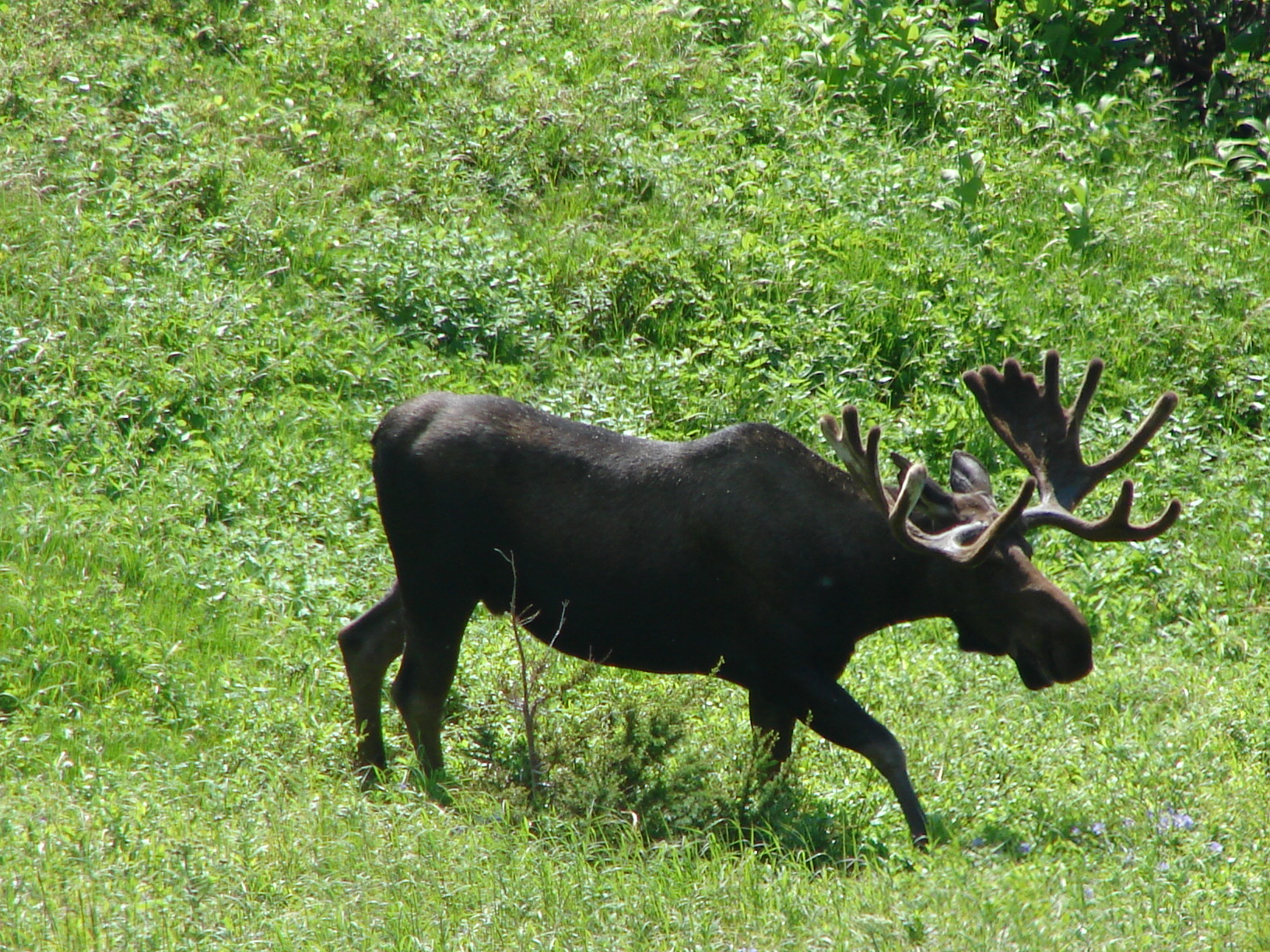
I know folks like to see pictures, so I’ve added a couple of random shots taken over the past few weeks. The first one is of a large bull moose I ran into while hiking. I was glad he showed more interest in eating than in me.
And this next one is of a major highway intersection on the Kenai Peninsula. Beautiful isn’t it?

Brown Bears On Popular Local Trails
Brown bear sow, 3 cubs prompt Rover’s Run warning
BEARS: Signs have been posted in Bicentennial Park urging hikers and bicyclists to avoid trail.
By JAMES HALPIN
jhalpin@adn.com
Published: July 22nd, 2010 04:24 PM
Last Modified: July 22nd, 2010 04:25 PM
City officials are again urging the public to avoid the Rover’s Run trail in Far North Bicentennial Park because of a brown bear sow with three 2-year-old cubs that have been seen travelling it several times in the past week.

A surveillance photo of the trail shot last Wednesday — and posted on a municipal website, bears.muni.org — shows the four bears walking single-file down the winding trail. City officials say there is “a high probability of encountering a brown bear on this trail” and are urging people to “avoid using Rover’s Run under any circumstances.”
Brightly colored warning signs have been posted at Gasline and Rover’s Run, Rover’s Run and Moose Meadows and Rover’s Run and Viewpoint Trail.
The majority of trail users are bicyclists who are more likely to encounter a bear because they move quickly and quietly, city officials said.
The city has closed Rover’s Run the past two summers after two bear maulings in the summer of 2008 and continuing concerns over bear encounters there. Those encounters involved a bicyclist and a jogger.
Other government agencies that manage land in Alaska, including state and federal parks, regularly have closed trails or sections of parks because of bear danger.
Read more: http://www.adn.com/2010/07/21/1376279/sow-3-cubs-cause-rovers-run-warning.html#ixzz0ucjuFKMp Taken from the Anchorage Daily News.
Misty, Mosely, and I took heed to the warnings several weeks ago and stopped using this and other nearby trails, especially after a bicycle commuter was charged and knocked from his bike early one morning by this same sow. He had the presence of mind to “play dead” and was batted around by the mother before she walked off. He apparently poked his head up a bit too early, recalling the attention of the sow, as she came back for a few more swaps and a small bite or two. After she left the second time, he stayed down this time…as you can imagine…for quite some time. Afterwards, he got up, picked up his bike, and continued on to the Native Hospital, which is his place of work and where he had the bite wounds cleaned and patched before moving on with his day. He is a fortunate man and a brave one. I’m not sure at all I would have the mental fortitude to play dead, so hope I’ll never be tested. Meanwhile and as crazy as it sounds especially after relaying this particular story, hiking other local trails is part of my regular routine up here in the Last Frontier albeit with bear spray at the ready and fingers crossed that my fight or flight mechanism will never be engaged.
So after setting up camp, cooking dinner, hanging food, and exploring the area of 17 mile beach, Carol and I set up our camp chairs on the beach looking northwest toward Willard Island and commenced to relax in the general beauty of the evening. Just offshore there must have been an enormous school of fish as there were dozens upon dozens of seagulls circling an area about the size of the size of a baseball diamond. Just flying and calling and diving with huge splashes in a never ending circle. In addition to the gulls, we saw a loon with two babies on her back, pigeon guillemots, oyster catchers, and various other sea birds all coming in for the all you can eat buffet.
It wasn’t long before we heard the telltale blow of a whale just offshore, followed by another, then another. I guess word of the all you can eat buffet had spread. Altogether, we counted 4 grown whales and one baby. They came and they stayed, cruising back and forth along our beach in search of food. It was difficult getting a good shot of them as they were being most stealthy. We called them low riders, but this is one shot I was able to get that evening.
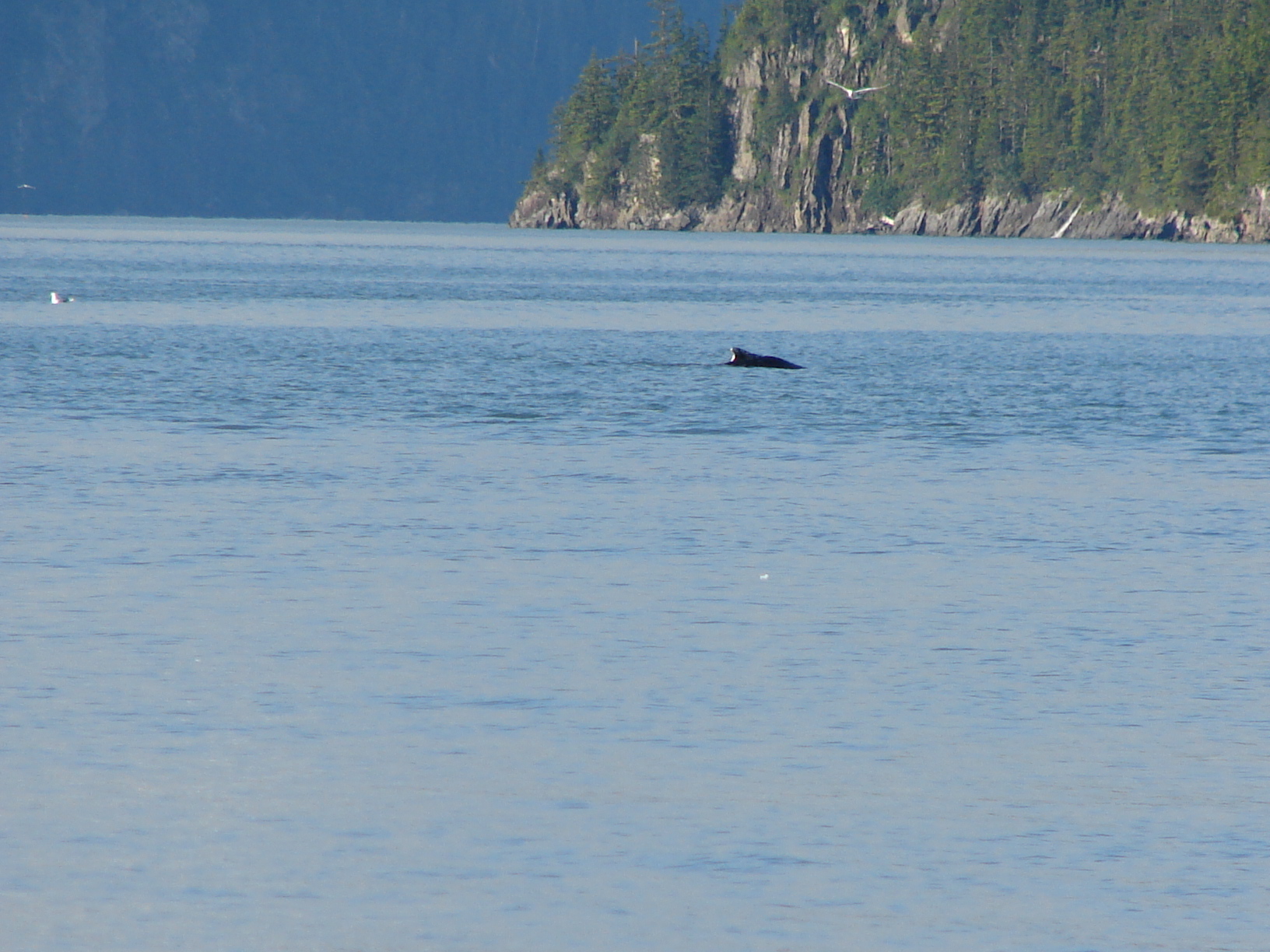
Back and forth they swam and around and around the gulls flew. What a sight. Getting tired, we finally retired to our tents where we listened to the raucous gulls and blowing whales all night long. We had coffee and oatmeal with the gulls and whales in the morning and looked forward to getting on the water for a more up close and personal visit. Once packed, we paddled out into the “buffet” and waited. The whales kept up there feeding pattern and soon we were surrounded. There were fins to the left and fins to the right, fins to the front and fins to the back. Goodness me. Sitting in a kayak on the water puts you just at about eye level with the whales. Take a look.


We hated to leave our pod of whales, but had about 9-10 miles of paddling ahead of us, so we had to get a move on. From our whale watching spot, we headed across the bay to a waterfall via the northern tip of Willard Island. Click on the map link and use the zoom and pan functions for a better look. Blackstone Bay/Prince William Sound out of Whittier, AK
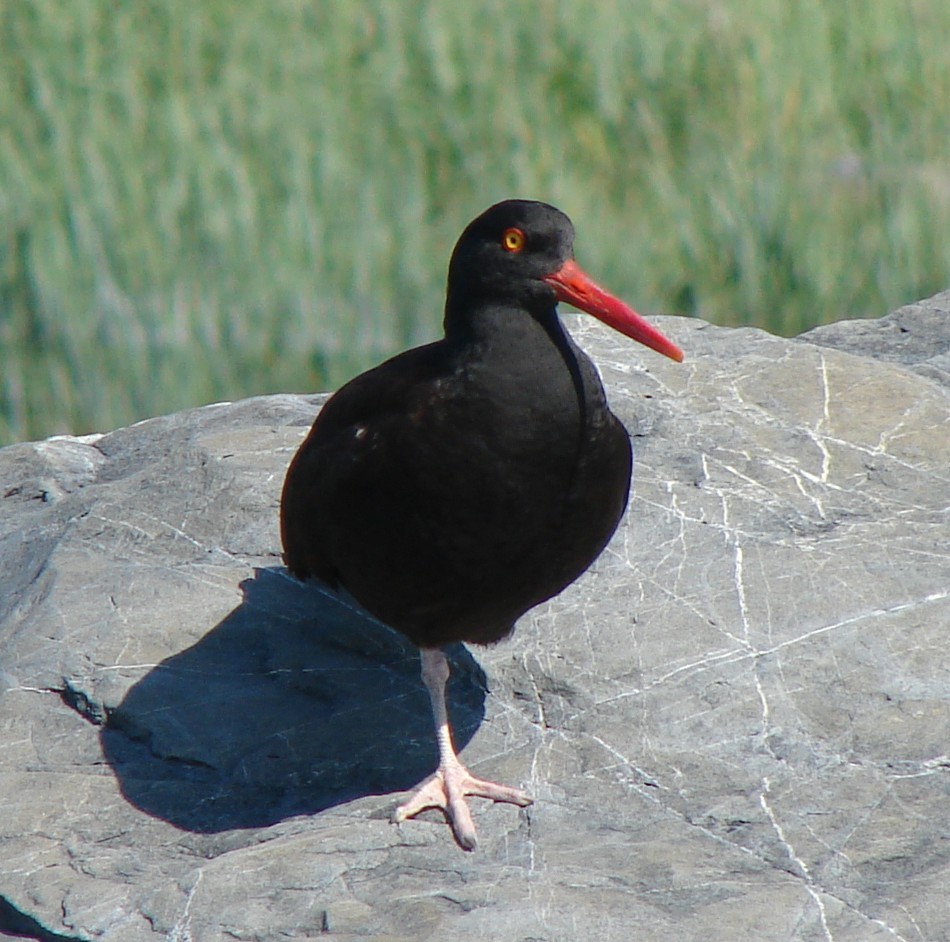
Back on the west side of the bay, we stuck close to shore exploring all the nooks and crannies on our way up to Decision Point where we could camp for the night. I couldn’t get over the color of the water. It was teal and reminded me of the color they dye the water at Florida theme parks. Amazing. Along the way we saw lots of harbor seals, but they are shy, so as soon as they realize you’ve seen them, they quickly dive below the surface often popping up behind you for a more covert look. Additionally we saw many pigeon guillemot. These are the most unlikely birds whose proportions seem all wrong. For their size, they have large brown bodies, tiny white wings, and bright organge feet and legs. Like Puffins, they have a difficult time getting airborne from the water due to their small wings, but are great “fliers” underwater. They dive and swim like a fish, which I guess is a good thing since fish are their staple diet. They have to be able to catch them. No photos of these crazy birds, but I do have one of the bizarre looking Oyster Catcher.
Photos taken along the west side of the bay. This first one is the waterfall we used to spot our crossing from Willard Island to the West side of the Bay.

The crazy, red-eyed Oyster Catcher.
One of many “hanging gardens” of Blackstone Bay.

After many long hours in our kayaks and 9-10 miles later, we beached our boats at Decision Point State Marine Park and brewed a much needed cup of tea. Just delightful. On the map, you can see that Decision Point is at the mouth of Blackstone Bay on the shores of Passage Canal, so looking out from the beach is like watching boat TV. All manner of floating vessels passed us by heading up and down Passage Canal. From the crabber cum sailboat to the Alaska High-speed Ferry to a group of Skidoos to other kayakers to commercial fishermen, we saw it all.
We shared the Marine Park Campground with another couple from Anchorage and a youth adventure group who had been out kayaking for 8 days. What fun. I was tired as the whales and gulls had kept me awake the night before, so I retired early. Rain was the order of the day when we awoke, which is no big deal to a kayaker. Amazingly, once in your boat, its hardly noticeable-even when its raining so hard the drops are bouncing back up into the air after hitting the water. Its wind and waves that are the bane of kayakers and fortunately, we didn’t have much of either. Only rain for 9-10 miles up Passage Canal and back to Whittier. The scenery is equally beautiful in the rain-just a different kind of beautiful. My camera was safely tucked away in its dry-bag, so I don’t have any shots of our last day on the water, but we saw lots of boats, coves, bald eagles, more pigeon guillemots, waterfalls etc.
How lucky we were to have such an incredible few days. We are already talking about kayaking in Baja in January of 2012, but that’s after mountain biking in Moab this coming winter, so stay tuned.
Who wants to go kayaking? I do! I do!
The short version: 3 days of paddling about 9 miles a day in 360 degrees of gorgeous. Humpback whales in close proximity. Glaciers and waterfalls galore. kittiwakes, Oyster Catchers, Pigeon Guillemots and other sea loving birds everywhere you look. Harbor Seals. Sea Otters. Sun. Rain. Choppy seas. Flat glass calm seas. Perfection.
The long version: My friend Carol is a most experienced and knowledgeable kayaker who has offered to take me kayaking numerous times over the years. Though I have taken her up on her offer a time or two, I knew I had to go one more time before leaving on my Big Trip with Dora, so off we sped to Whittier with two boats and three days worth of gear. Before moving to Alaska, I hadn’t realized that we, the United States, had a secret deep water port in the North during WWII. Since the cat is already out of the bag, I can tell you that we did, and it was in Whittier, AK. How ’bout that? It was just in the last 10-12 years that the single lane train tunnel through the mountains was opened up to private vehicles allowing easier access to the small town and its harbor.
As I was saying, Carol and I loaded up and caught the 9:30 tunnel to Whittier on Friday morning. Once in town we located Epic Charters (red marker on map) whom we had hired to take us, our boats, and our gear well into Blackstone Bay where we would begin our trip (green marker on map). The ride was about an hour or so and took us past beautiful scenery and multiple rafts of sea otters, each raft consisting of about a dozen otters and their young. Our drop off was Picnic Beach near the head of the Bay. Once off the boat, we packed all our gear into our kayaks and set sail, so to speak, up Bay toward the Kittiwake Rookery, waterfalls, hanging glacier, and the tidal glacier that gives the Bay its name, Blackstone Glacier. If you look at the map, you can follow our progress from the green marker sort of in a counter-clockwise direction. I’m new at this map thing, so we’ll have to see how it goes. Click on link to view map. Blackstone Bay/Prince William Sound out of Whittier, AK Please use the zoom and directional functions on the map to your advantage. I was hoping to post photos at each map point, but can’t seem to figure out how to do that just yet.
This is Carol on the way to the glaciers and the kittiwake rookery. You can see Blackstone Glacier on the left. It is a Tidal Glacier as it comes all the way down to the water. The glacier on the right is called a Hanging Glacier as it “hangs” off the mountain up in the air.

Carol in front of the Hanging Glacier and its powerful runoff waterfall resulting from its rapid melting.

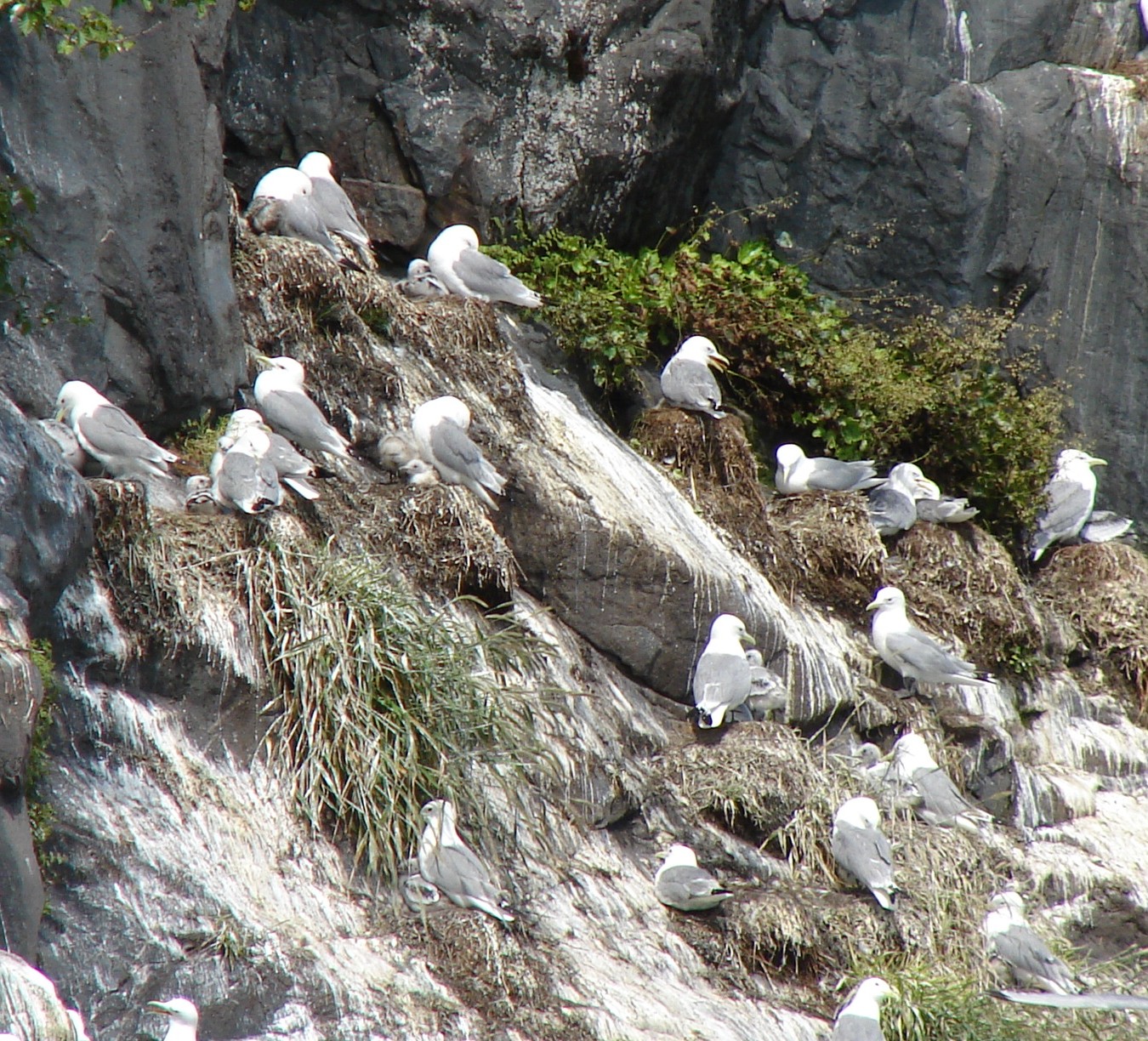
Kittiwakes are a type of small seagull and one of their many nesting sites, called a Rookery, is located to the right of the Blackstone Glacier. You can tell a Kittiwake by their black wingtips. See photos below.

In addition to the many visual sensations were the audible sensations, and overriding the crashing water from the falls and the constant cries of the gulls, was the sound of a moving glacier. Think of a summer thunderstorm in the South. First the crack of lightning followed by booming and rolling thunder. This is precisely what a glacier sounds like as it creaks and moans its way downhill.
After quite a while paddling around this area, we decided it best to get a move on since we had a number of miles to cover, so out through the iceberg and seal ridden water we did go. Did you know that ice in sea water sounds just like a bowl of rice krispies in freshly poured milk? Well, it does, so we paddled through the rice krispy ice and on around to the east side of the Bay and headed north toward 17 mile beach, which we hoped would be our campsite for the night. Here are some shots taken along the way.
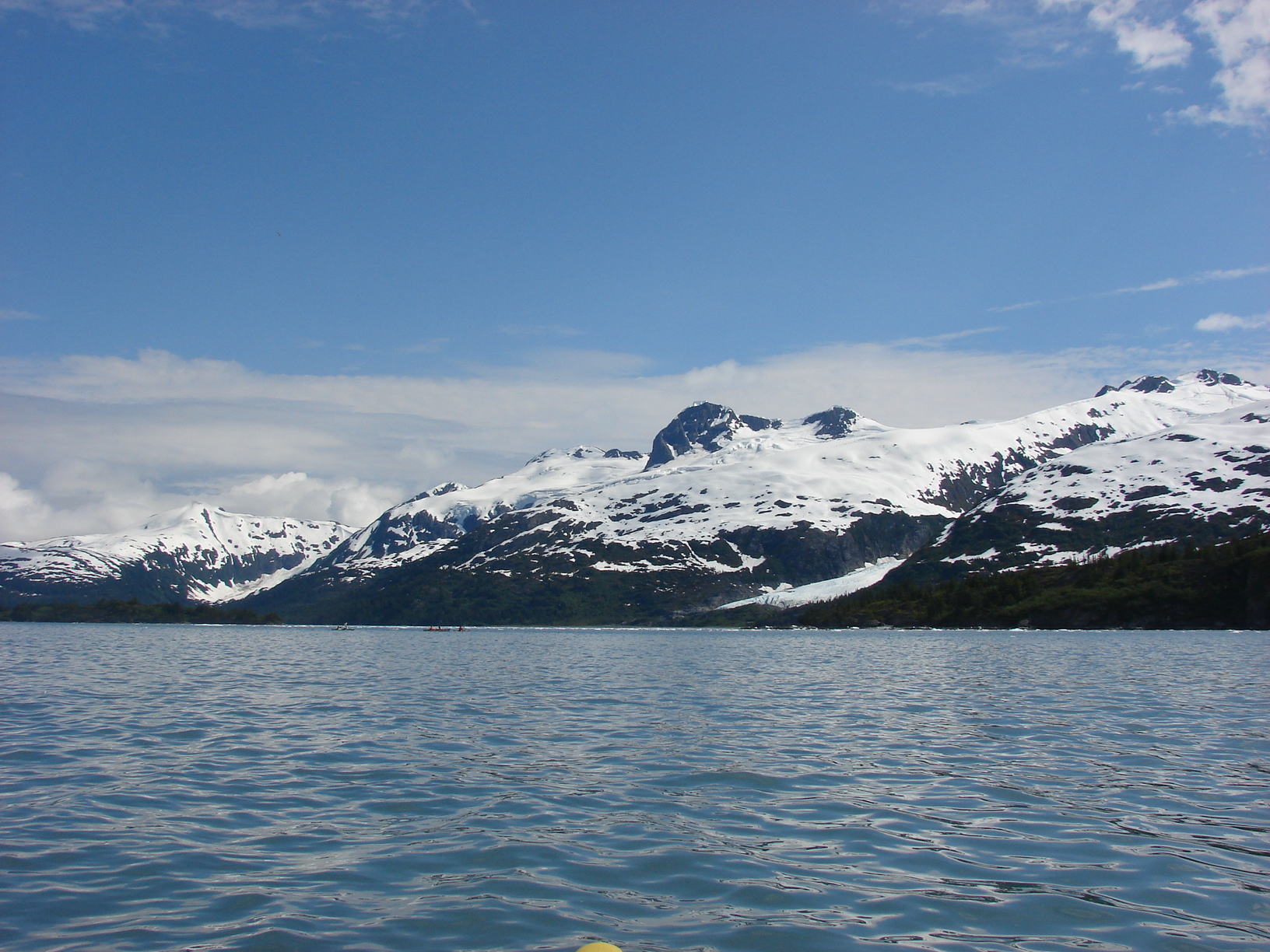
This first shot is the view looking up the bay from Blackstone Glacier.
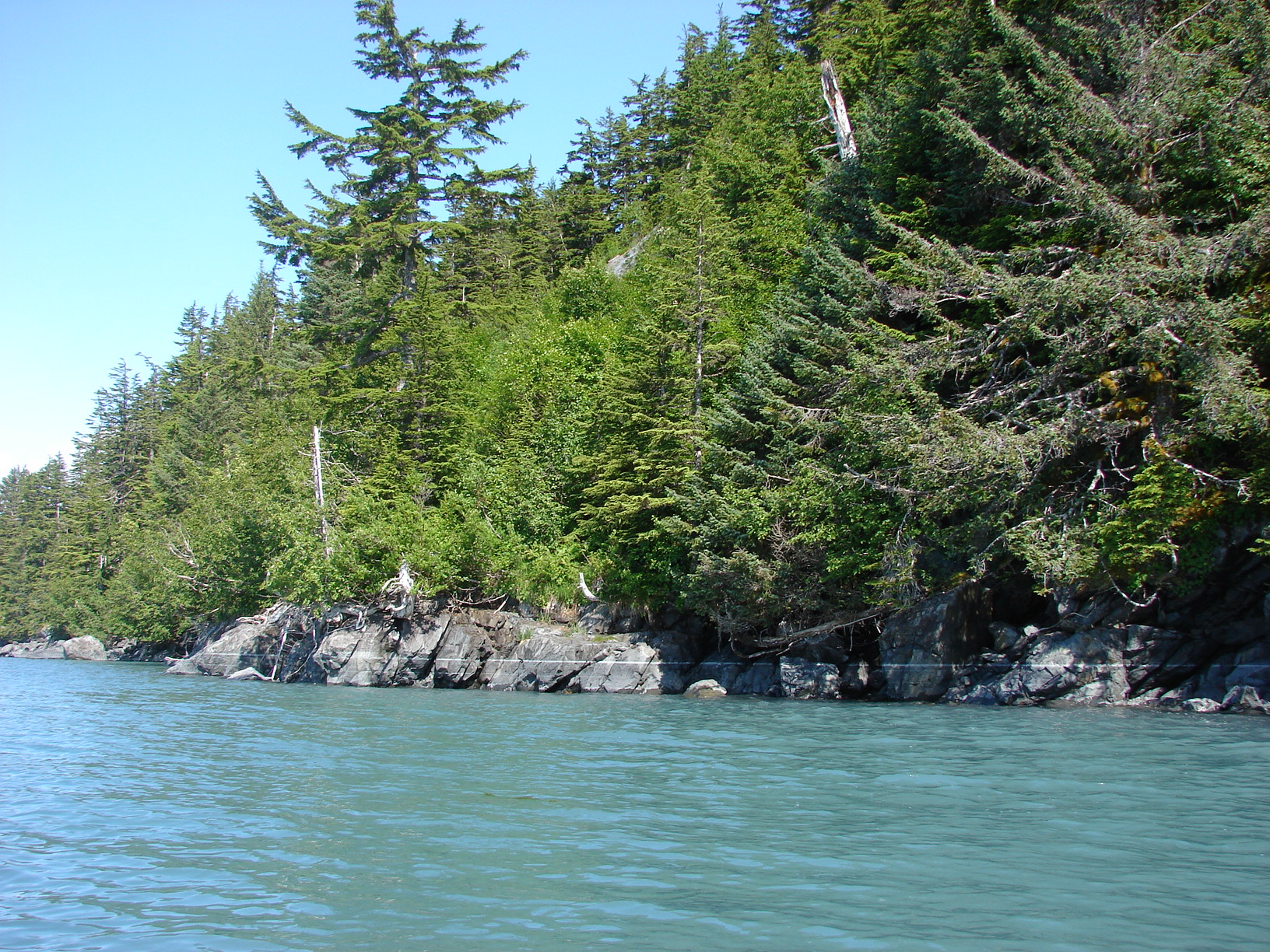
The high tide mark through here looks like someone drew it with a ruler and a piece of chalk.
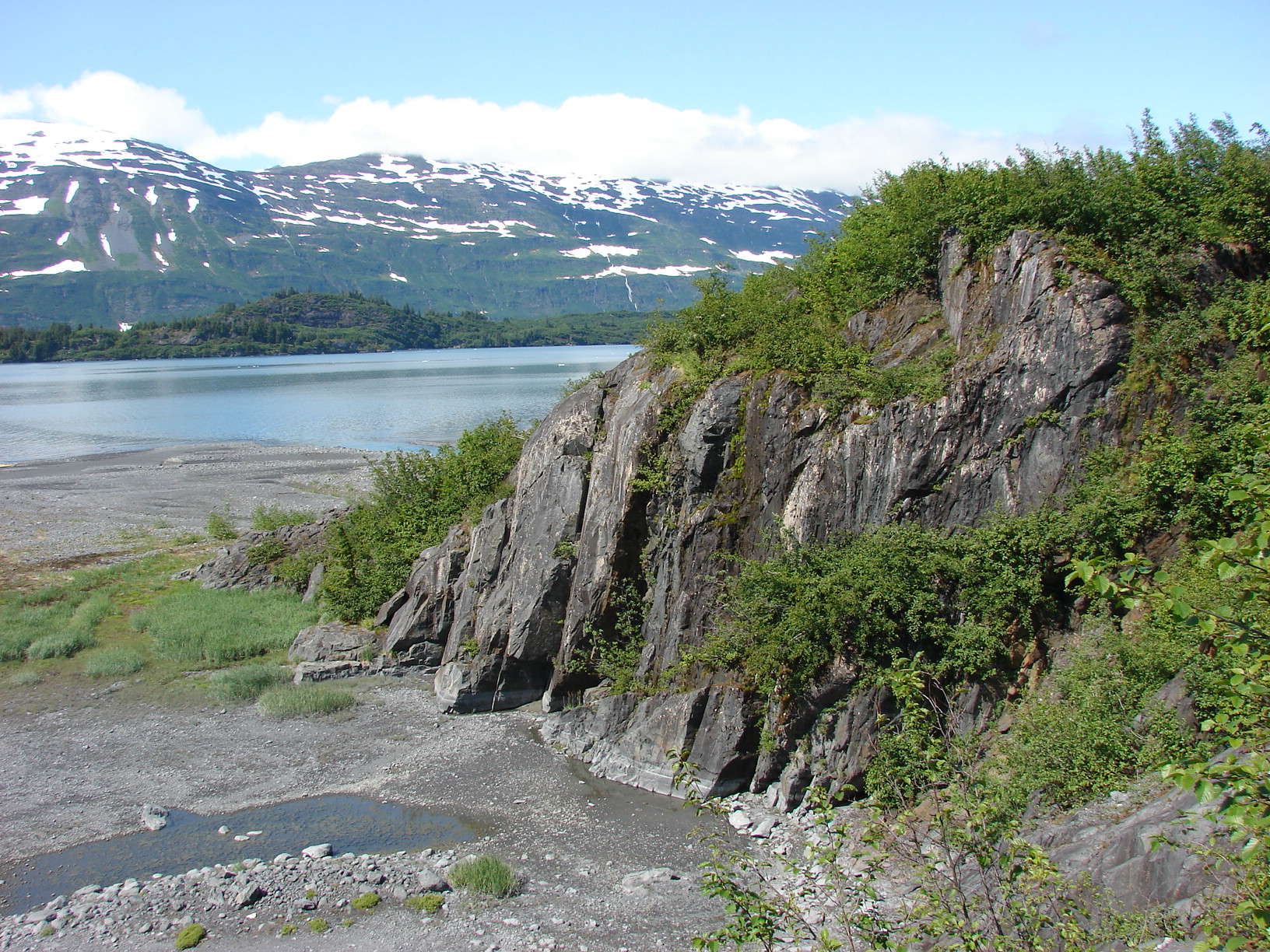
This is where we got out to do the Earthcache at Lawrence Glacier.
At about 5:30, we landed on 17 mile beach still hearing the boom of the glacier in the distance behind us.
See if you can see one of our tents peaking out of the woods.

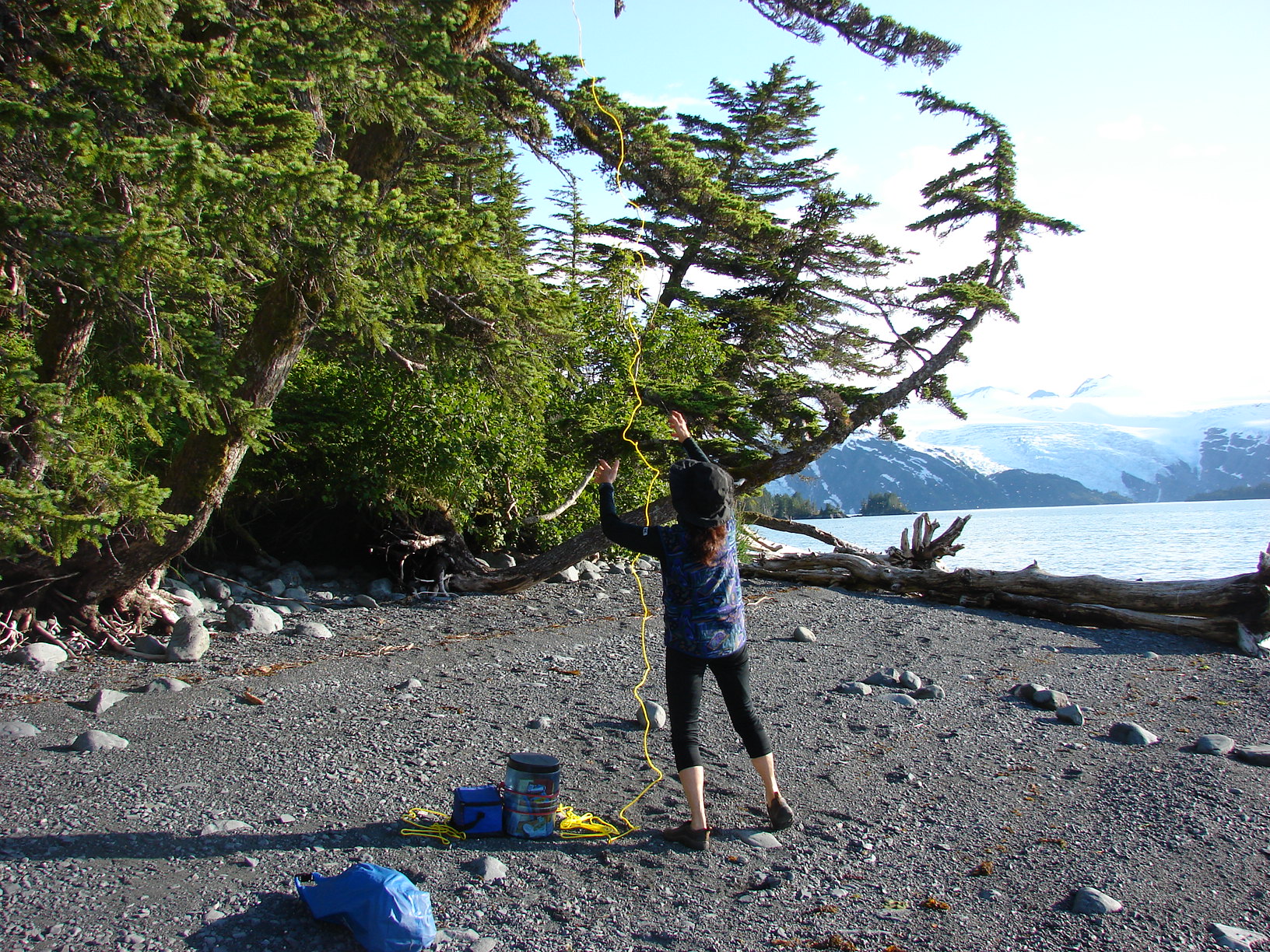
Carol attempting to bear proof our food by hanging it for the night.
A view back at Blackstone Glacier from 17 mile beach.
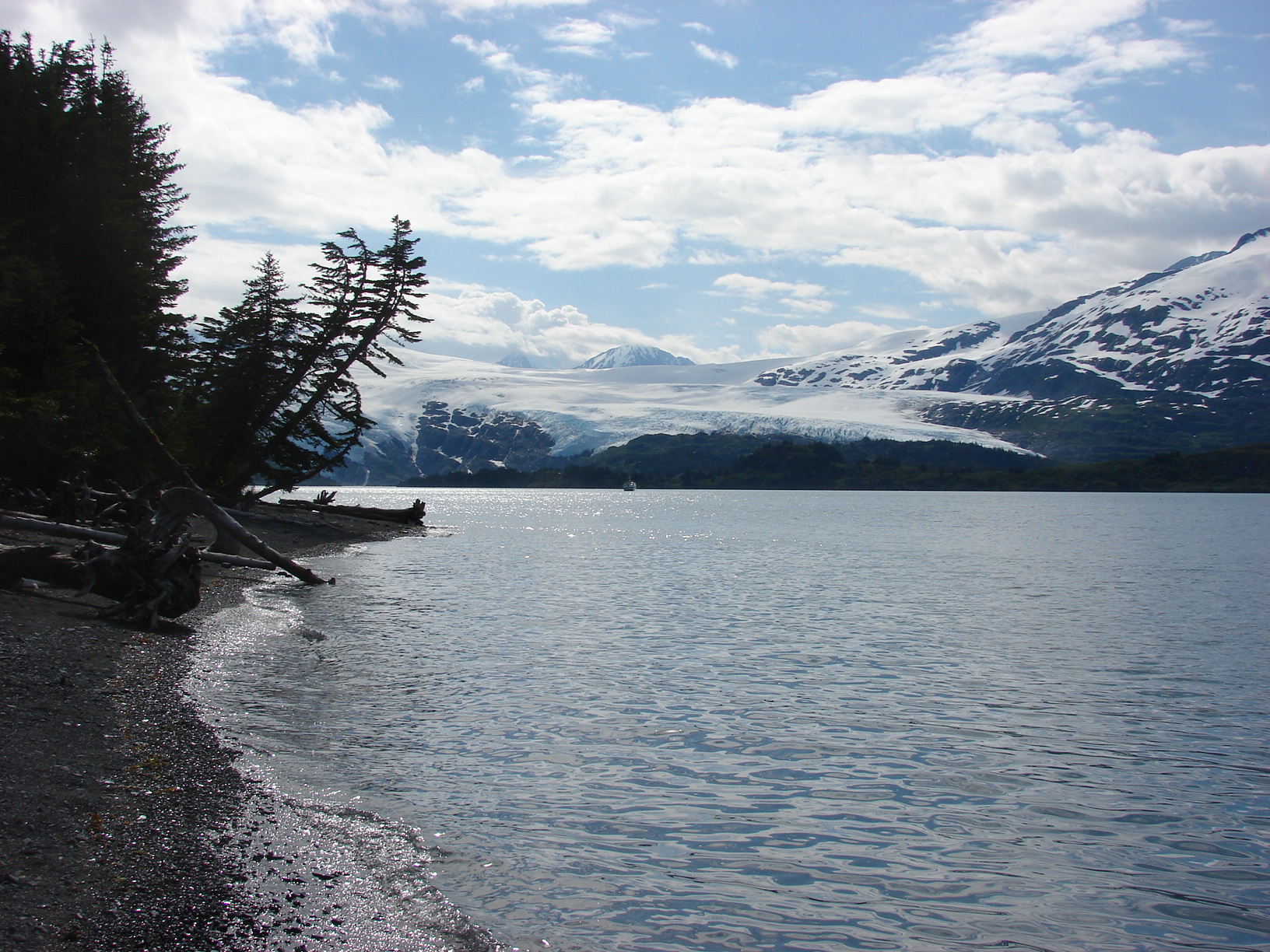
The beach was littered with “Alaska-style” driftwood.

We set up camp, cooked dinner, and explored the area all the while ignorant of the fact that we would soon be joined by four adult humpbacks as well as a baby who would stay with us, just off shore, all night and into the next day, so stay tuned.
4th of July with Blizzy and Fear Of The Sky
This is Blizzy.
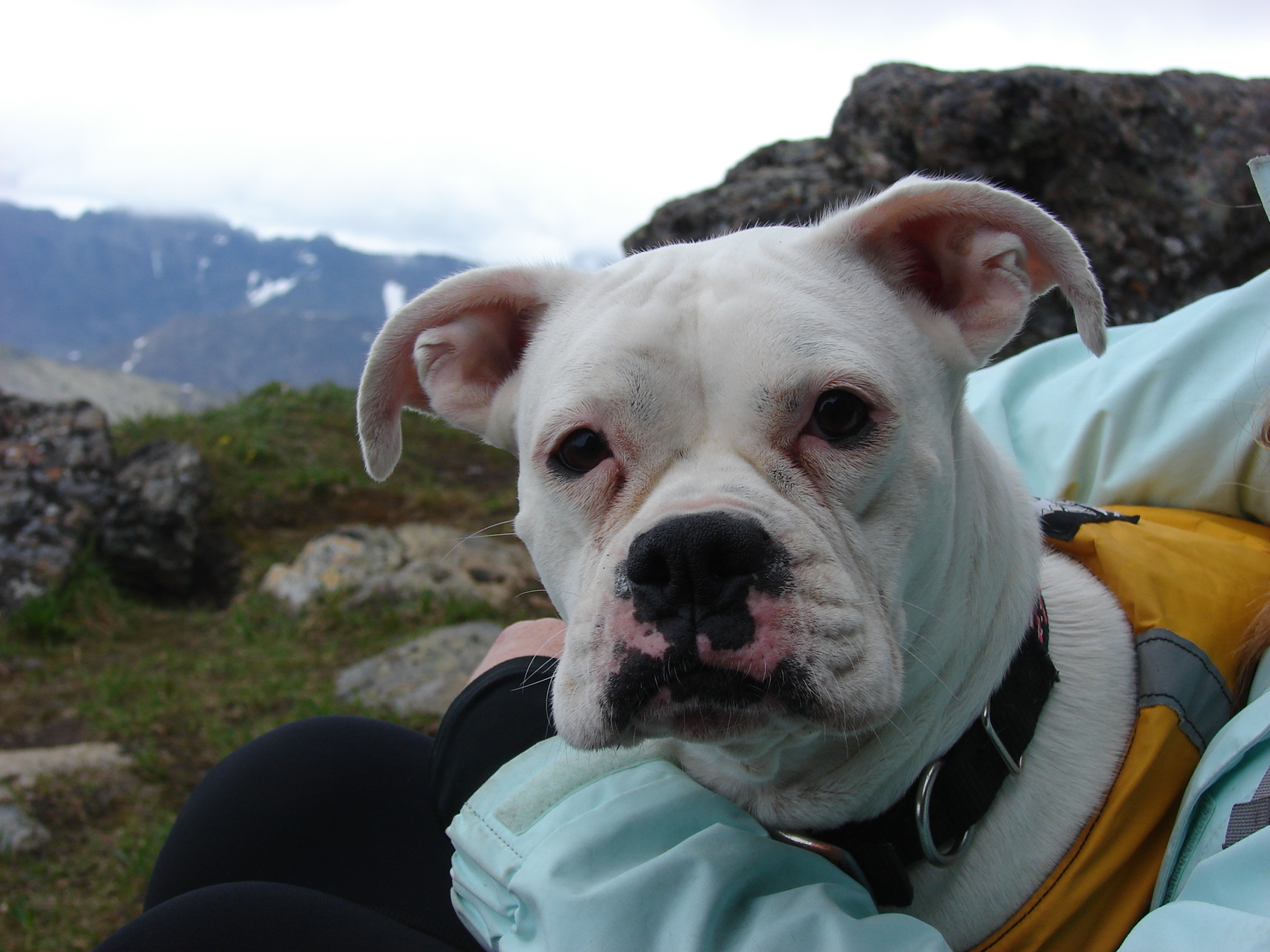
Doesn’t she make you laugh? Blizzy is Devin’s granddog and was in her care over the Holiday weekend.
We, Devin and I, had been wanting to hike up McHugh for a while now. There were several underlying reasons for this desire: 1) exercise, 2) the views and being outside in general and, 3) a geocache dangling like a carrot at the top. Those who know us know that Door #3 held the reason that trumps all reasons. The geocache is called, Fear Of The Sky, and it was going down come rain or shine!
The cache is well hidden and sits just below the 4311 ft summit. We made it up there after about 3 hours of steady hiking through clouds and an intermittent sprinkling of rain. Though the wind never reached the point where we had to don our wind goggles, it did blow enough to put a coat on Blizzy as she weighs nothing and has negative body fat. A note on wind goggles: Yes, we actually know people who carry wind goggles with them so as to not be turned back by gale force winds while making a bid for a summit. Devin and I are of the school that if you need wind goggles, it’s time to go home. As such, we cannot be considered serious peak baggers by the local mountaineering community, which suits us just fine.
Back to the story. We made it to ground zero of Fear Of The Sky after some scrambling and had the cache in hand after a bit of poking around. This is me (Momima) signing the cache log book.

After replacing the cache, we scrambled further up and completed our “summit bid” successfully. We enjoyed the views while trying to keep out of the wind, took a few photos, had a snack, and headed back down singing, “It’s A Grand Ol’ Flag”., which always reminds me of summer camp, my Dad, and the porch in Cashiers, NC. It took us about 2 hours of ridge walking and bear shooing to get back to the car. What a fine way to celebrate Independence Day. I hope all of you had a fine time as well.
Margie/Momima on the Summit.

View from the summit including Turnagain Arm and the Kenai Mountains.

Another view of the summit including the mouth of Turnagain Arm and Cook Inlet.

Devin trying not to laugh at how cute Blizzy is.

Blizzy running around and playing in the wind.

A friend from Florida was up in Denali just two weeks prior to my visit and was able to take some great shots of The Mountain. Since I was not able to provide one, I thought I’d share his. It really is magnificent to behold, especially from such a close vantage point. Thank you Russell for your most excellent photo.

In addition to this masterpiece, I wanted to include a few miscellaneous shots I took while enjoying the Park, especially of the wildflowers and a few of the various critters not mentioned earlier.
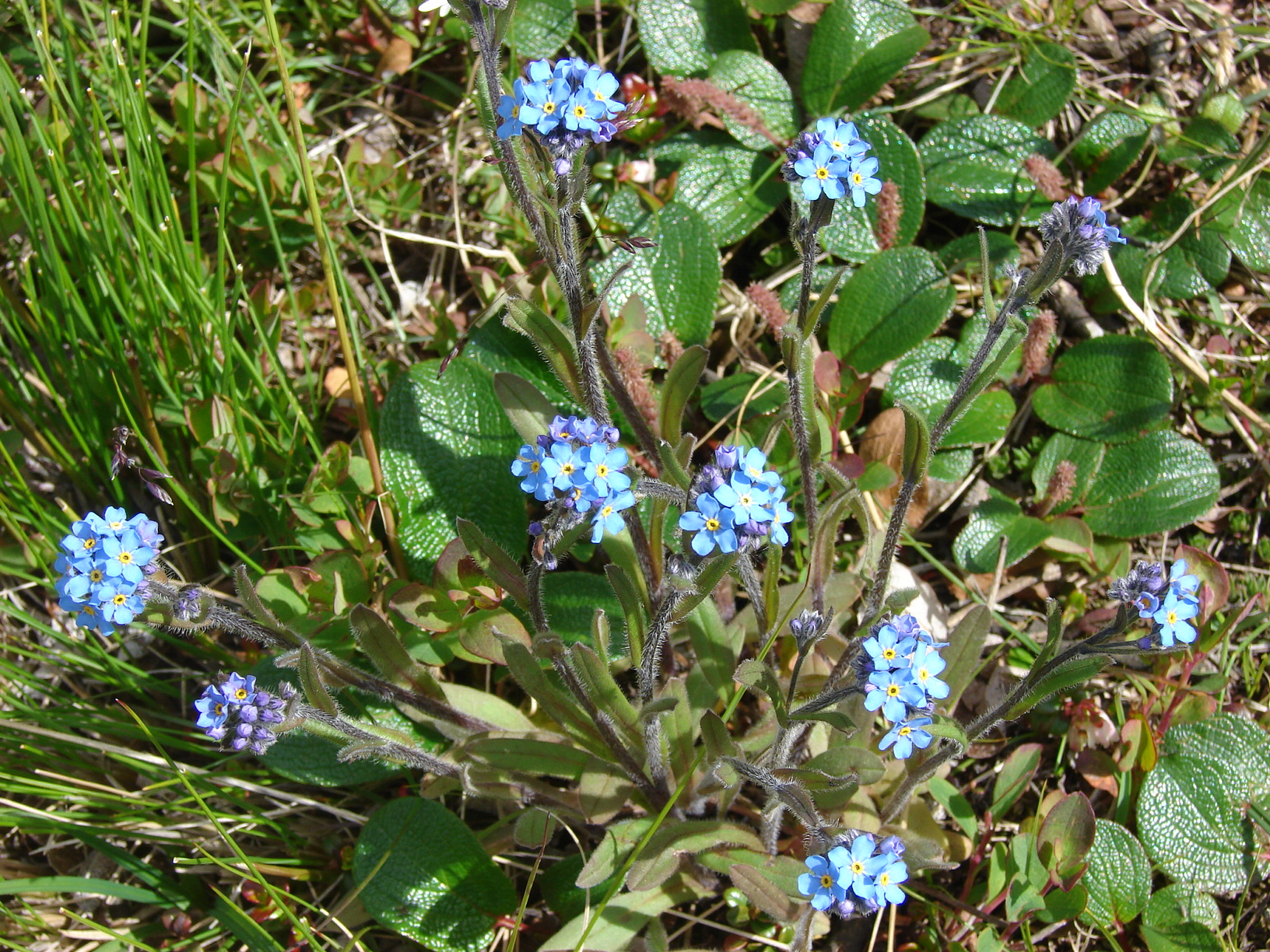
The Alaska State Flower: The Forget-Me-Not. A tiny little thing.
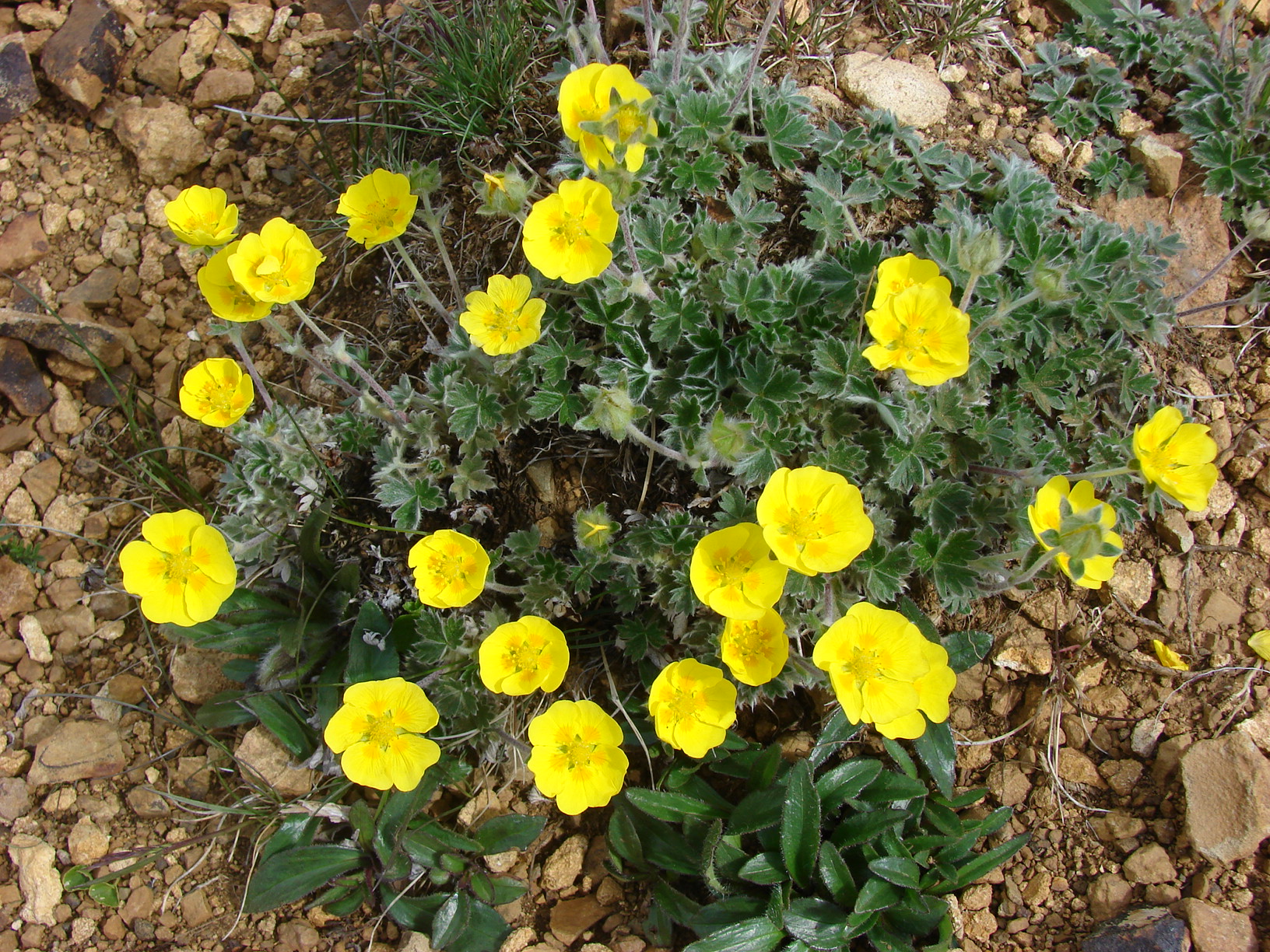

Next, the Golden Eagle. You may wonder about Bald Eagles since they are so prevalent in Alaska, but Bald Eagles are fish eaters and since fish are not at all abundant in the Park, Golden Eagles are the ticket here.

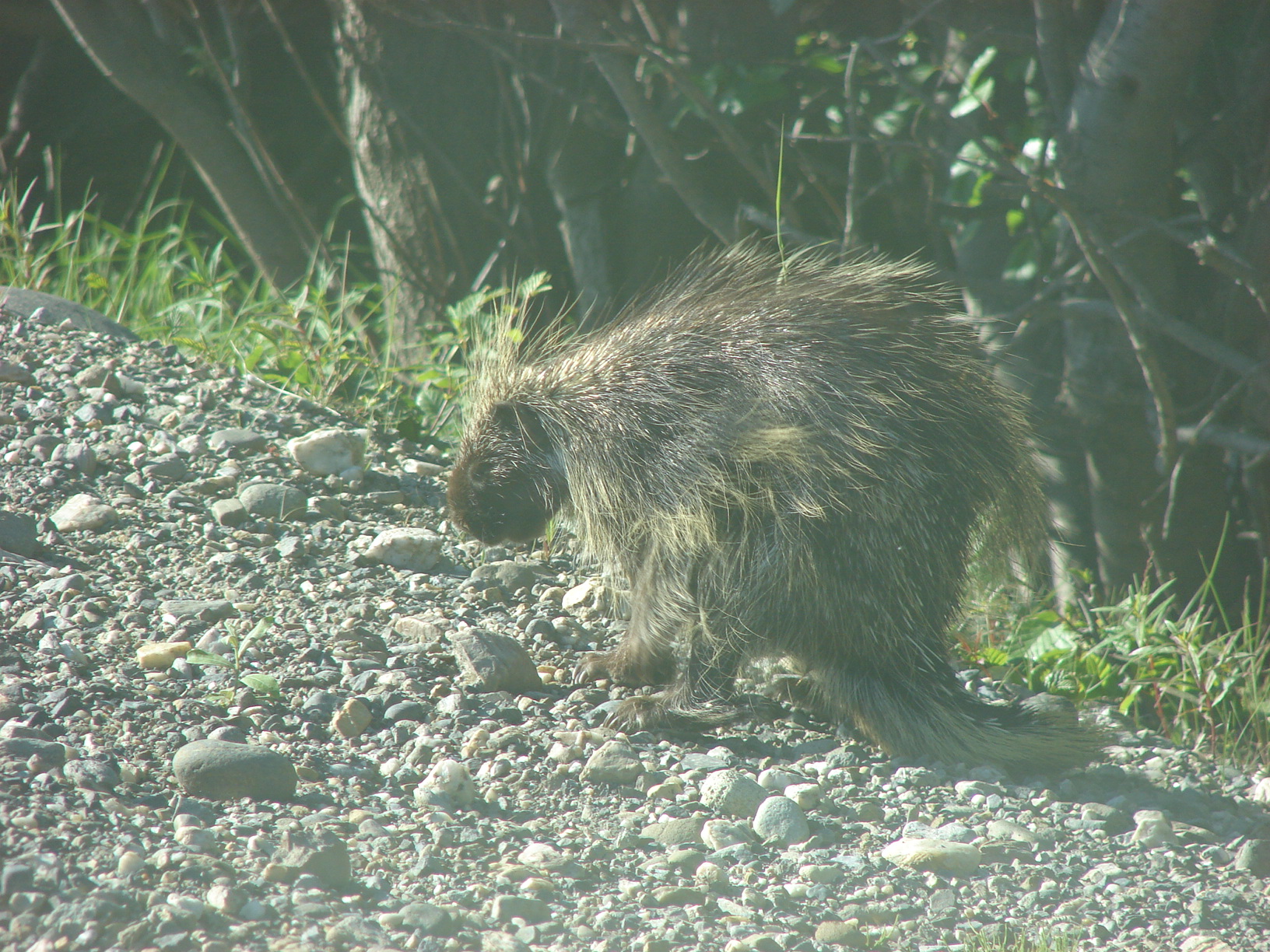
Roadside Porcupine
Hoary Marmot

And now, the animal responsible for the most injuries to humans visiting the Park…drum roll please.
Ladies and Gentlemen, I give you the…
Arctic Ground Squirrel!

That’s it for my Denali blogs. It’s been great sharing the fun.
I’ve just planned a kayak trip to Prince William Sound for later in July, so stay tuned.
As I mentioned earlier, Aaron and I had 8:25am tickets on one of the many Park Shuttle Buses all the way out to Wonder Lake located at mile 85 and just about at end of the road. Remember that private vehicles are not allowed past mile 15 unless you are camping at one of the campgrounds further inside the Park and once you get there, you are not allowed to use your vehicle again until its time to head back out. Since thousands of people visit the Park on a daily basis (most of them never get too far past the Park Entrance), the shuttle bus system was adopted to cut down on the negative footprint this amount of continual visitors would have. There is a great map of the road and the various places I’m mentioning on the Park’s website, www.nps.gov/dena.
The bus ride out and back from Teklanika is about 9-10 hours, which is why I’ve never done it. I mean really, who wants to sit on a bus all day? Since neither Aaron nor I had ever been passed mile 15, we had agreed to bite the bullet and “do the shuttle” during this visit and boy, are we ever glad we did. Like I said, I felt like I was back in Africa on safari. Everyone on the bus had cameras and binoculars slung around their constantly swiveling necks with eyes glued to the landscape keeping a close eye out for anything with four legs, two wings, or the 20,320 ft tall mass of snow-covered granite called, Denali.
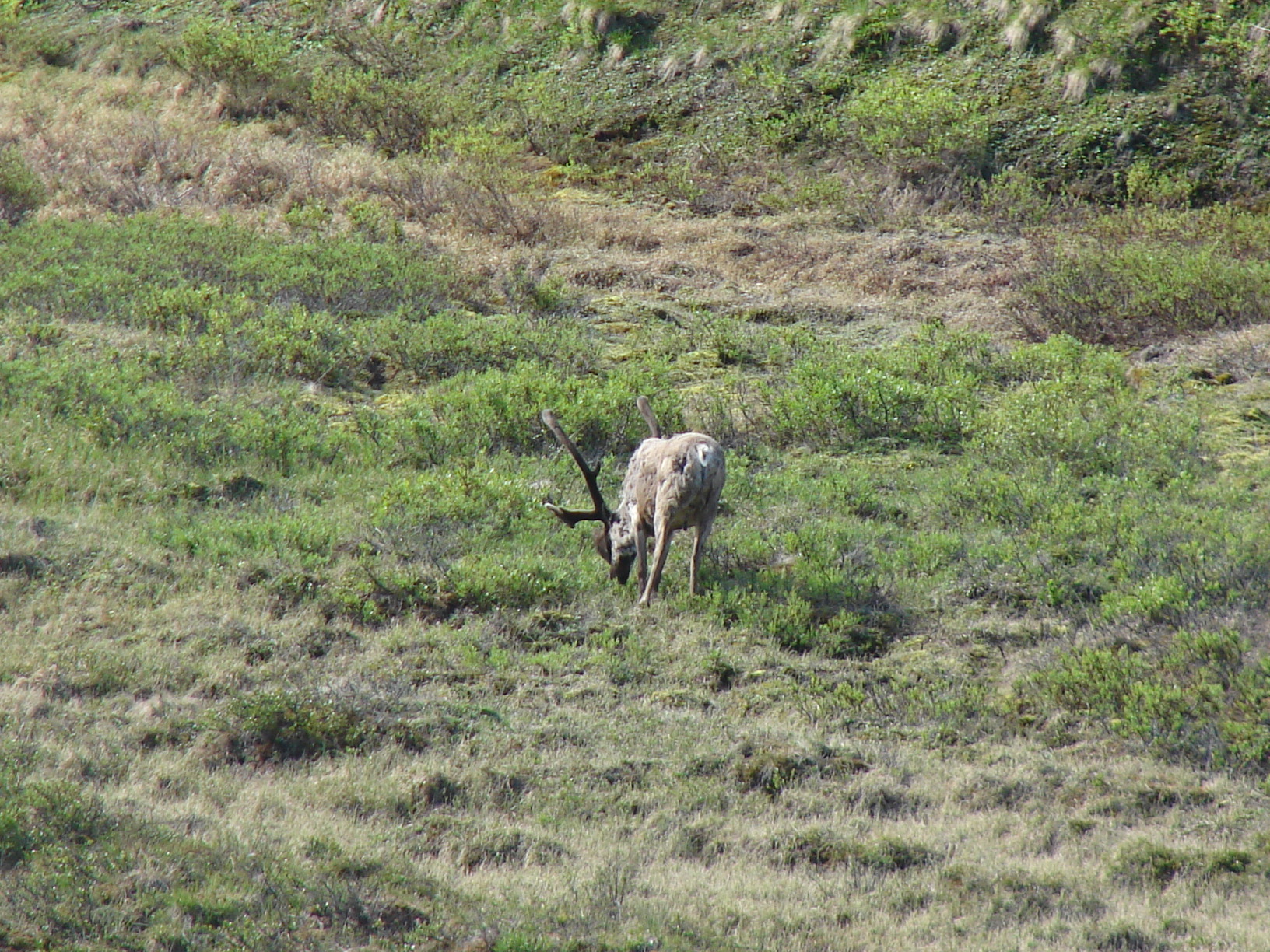
“Caribou, 3 o’clock!” “Bear, 8 o’clock!” “Sheep, 2 o’clock high!” What fun! Anyone who saw (or thought they saw) something would shout it out along with its general direction. The bus driver would stop and everyone would clamber over to the appropriate side of the bus jockeying for position. We had about a half-dozen or so grizzly bear sightings all of which were a bit too far away for a good photo, but were fun to watch through binoculars. I think the best was a sow with her two Spring cubs which were running and playing and cutting up and not paying any attention to their mother who was obviously trying to get them to come on. We also had multiple Caribou sightings. Many of these guys were down in the riverbeds, but one guy (or gal. It’s hard to tell which since both genders have massive antlers) was up on a hill lying in a patch of snow cooling off while this one below was totally focused on caloric intake. Eating is serious business for animals in this part of the world since they only have about 3-4 months during the summer in which to consume the majority of their nutrition and calories for the entire year.
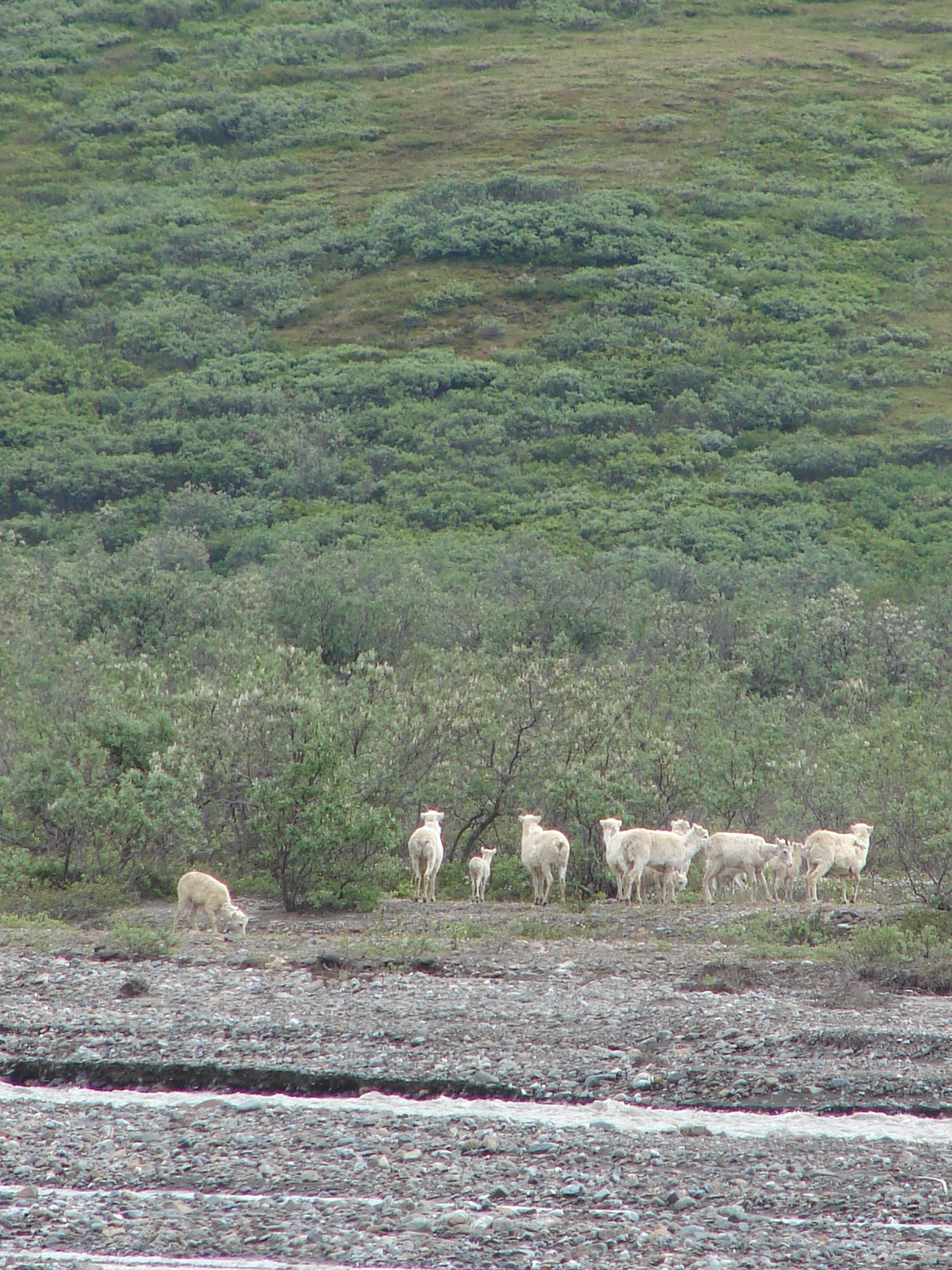
Dall Sheep, a cousin of Big Horn Sheep are prevalent in Alaska so it’s not surprising we saw several bands. During the summer months, the males and females separate for reasons having to do with the kids, but I’m not sure exactly why. In an earlier post, I showed a picture of a male band high up on a mountain which is where they are most protected from their primary predator, the wolf. It was a bit unusual therefore to see a band of females and kids down on the riverbed since here they are most vulnerable to attack. Our driver thought they might be crossing from one mountain to another. Hope they all made it.
I guess my favorite animal sighting had to be the wolf pack including a mother wolf with her 4 pups. Wolf sightings are not too common, so we were really lucky with this one and then again later with a lone wolf who decided to trot right by our bus, stop to hunt and catch some sort of rodent and then trot away again. See if you can spot the two adult wolves as well as the 4 pups in the photo below.


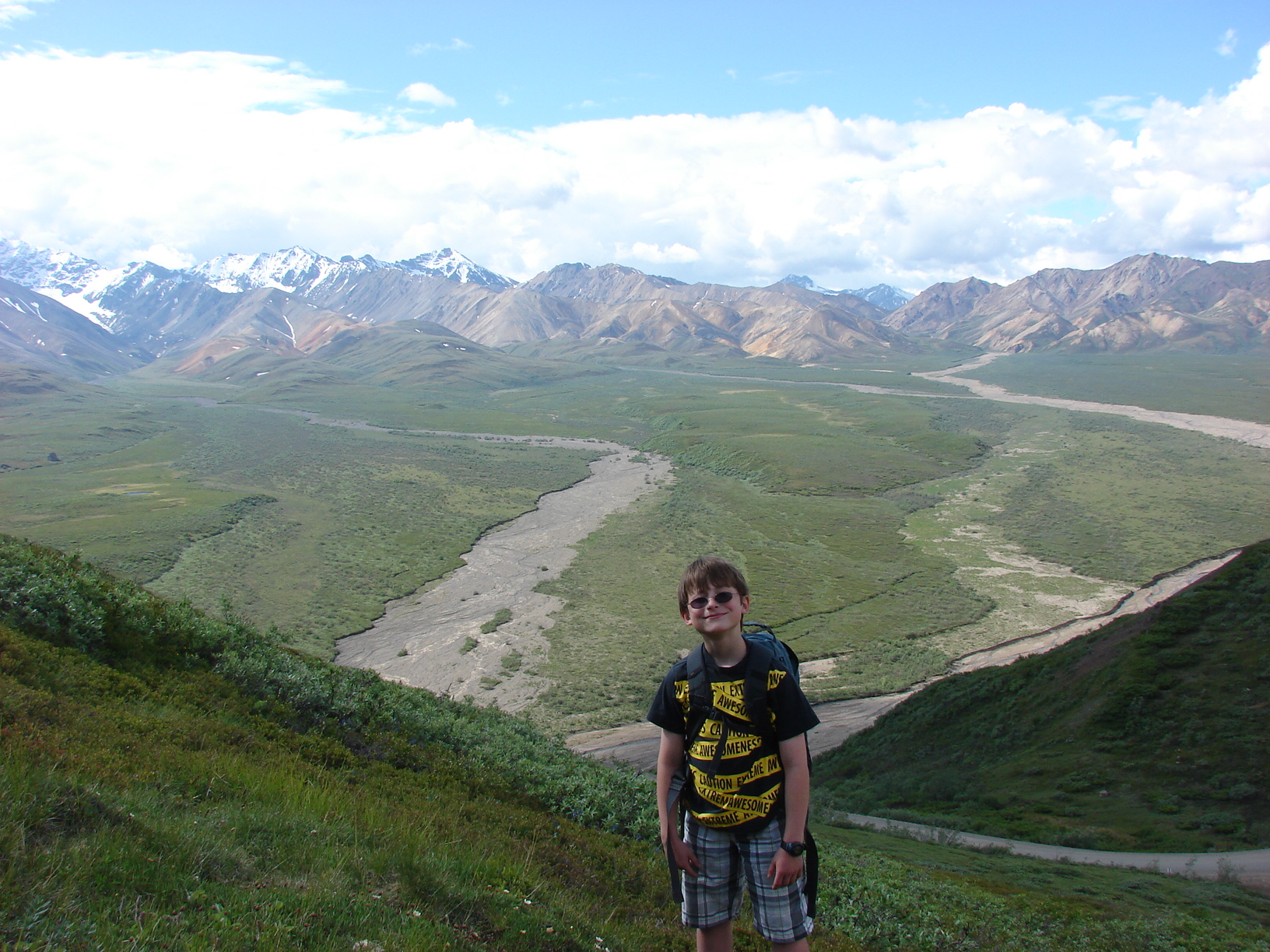
While all of the Park is beautiful, I think the Polychrome Pass area is my favorite. In fact, Aaron and I took a second shuttle another day out to the Pass so we could hike up Polychrome Mountain and enjoy the area on foot.
Polychrome Pass got its name from the colorful rock bands which are actually bands of hardened lava that had erupted roughly 80-100 million years ago. This area experiences frequent earth quake tremors as the plates along the Denali Fault grind together. It is estimated that the last glacial advance through this valley was some 10,000 years ago.

The Eielson Visitor Center is located at mile 66 and offers the closest view of Denali from anywhere on the road. Unfortunately, by the time we got out there, the mountain was shrouded in clouds and remained so for the rest of our visit. It is said that only about 1/3 of the folks who visit the Park…or Alaska for that matter will catch sight of the Mountain. Fortunately for Aaron and me, we’ve seen it many times from Anchorage and Talkeetna etc, but it sure would have been nice to see it up close and personal from mile 66. While at the Visitor’s Center we learned that there were 354 climbers on the mountain that day and that there had been 72 successful summits so far this season, which started in mid-late May. Climbers usually fly onto the Ruth Glacier high on the mountain from Talkeetna, AK and begin their ascent from there.
Just 19 more miles and we were out at Wonder Lake. I think the main reason to go out there is to get different views of the mountain. Since it wasn’t out, we were treated to a view of a loon on her nest and dozens of mosquito bites. 20 minutes later, we were thankfully back on the bus and away from the swarms of aggressive biters and were headed back down the road. What a day. Admittedly, the bus ride back didn’t have quite the appeal as the bus ride out, but it was enjoyable nonetheless. The scenery and animal sightings made it completely worthwhile.
After arriving at the Teklanika Campground and setting up our spot, we decided to explore the area as we had nothing on our schedule until early the next morning at which time we were to board the 8:25 shuttle bus to Wonder Lake. From our campsite, the river is less than a 5 minute walk through the willow, alder, and spruce. You might remember a photo of it with Misty in the foreground and mountains in the background from an earlier post.
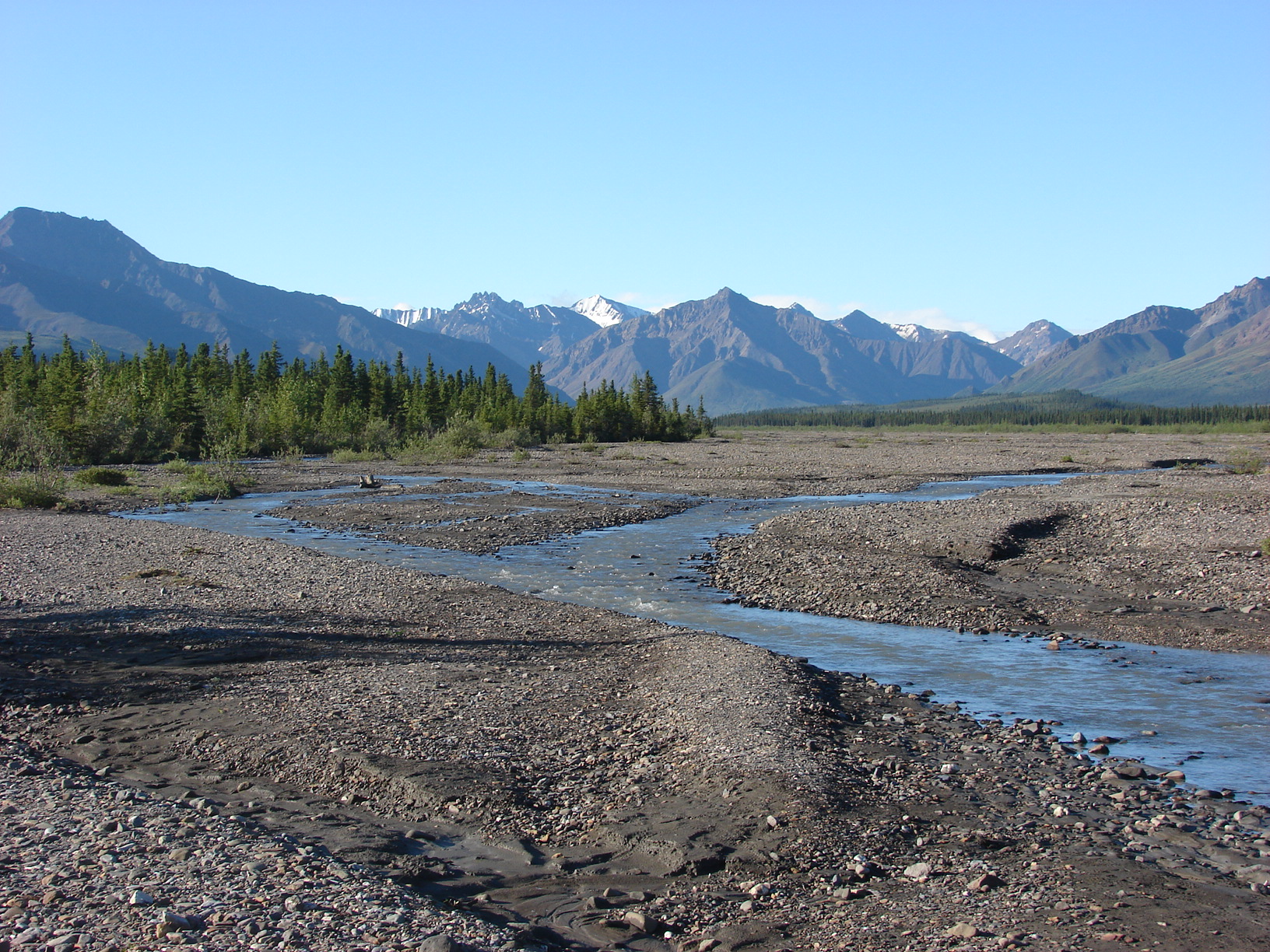
Like most rivers in Alaska, it looks like a huge bed of rocks and gravel with a few streams running haphazardly through it. This is called a “braided” river and here I’ll borrow some information gleaned from one of the Park’s several Earthcaches which explains that the relatively young mountains and glaciers in the Park send a heavy load of silt, rocks, and debris down these rivers. Some of that sediment settles and chokes off the river’s course, repeatedly forcing the water to cut a new path downstream. This is why the river bed is so wide. So wide in fact that it is impossible for the entire bed to fill up with water, unlike rivers in the lower 48 which are usually as wide as the river can get at flood stage. Denali is a bit of a sub-Arctic desert with only about 18 inches of rain a year and that, combined with the meltwater from the area glaciers, could never produce enough water to fill the riverbeds.
These wide rocky beds provide the animals a place where travel is relatively smooth offering a much easier option than the difficult trudging required to navigate through the heavy vegetation. They, like us, prefer the path of least resistence whenever possible. They are also a place where the animals can get a bit of a reprieve from the incessant mosquitos and other insects that constantly plague them at times during the height of the summer. Aaron and I were fascinated by the variety of tracks we found all jumbled together while hiking both upstream and downstream. As you will see, the river is indeed a wildlife superhighway.
We hiked about a mile and a half upstream to the point where we encountered a “Critical Habitat Closure”. During our visit, we found these closures in a few areas and learned they are there to protect the denning or nesting areas of certain animals. This particular closure was a wolf preserve of sorts designated as such to protect the area wolf pack’s denning sites from human interference. The pack inhabiting this area is one of three packs in the Park. Given this, it’s not surprising to learn that as we hiked up and back we saw the tracks of many wolves. As you can imagine, they look much like a dog track, just quite a bit larger.

Another afternoon, we decided to hike a ways downstream from the campground to see what we could see. I’m so glad we did as this is where we really saw a variety of tracks including moose, caribou, wolf, and grizzly bear all overlapping and crisscrossing each other. Most exciting. Poor Aaron was a bit nervous that some of the owner’s of the tracks were going to show up in person, but he needn’t have feared as the only thing we saw during our 3 hour hike was each other, the tracks, and some stunning scenery.
Caribou Track

Grizzly Bear Front Paw
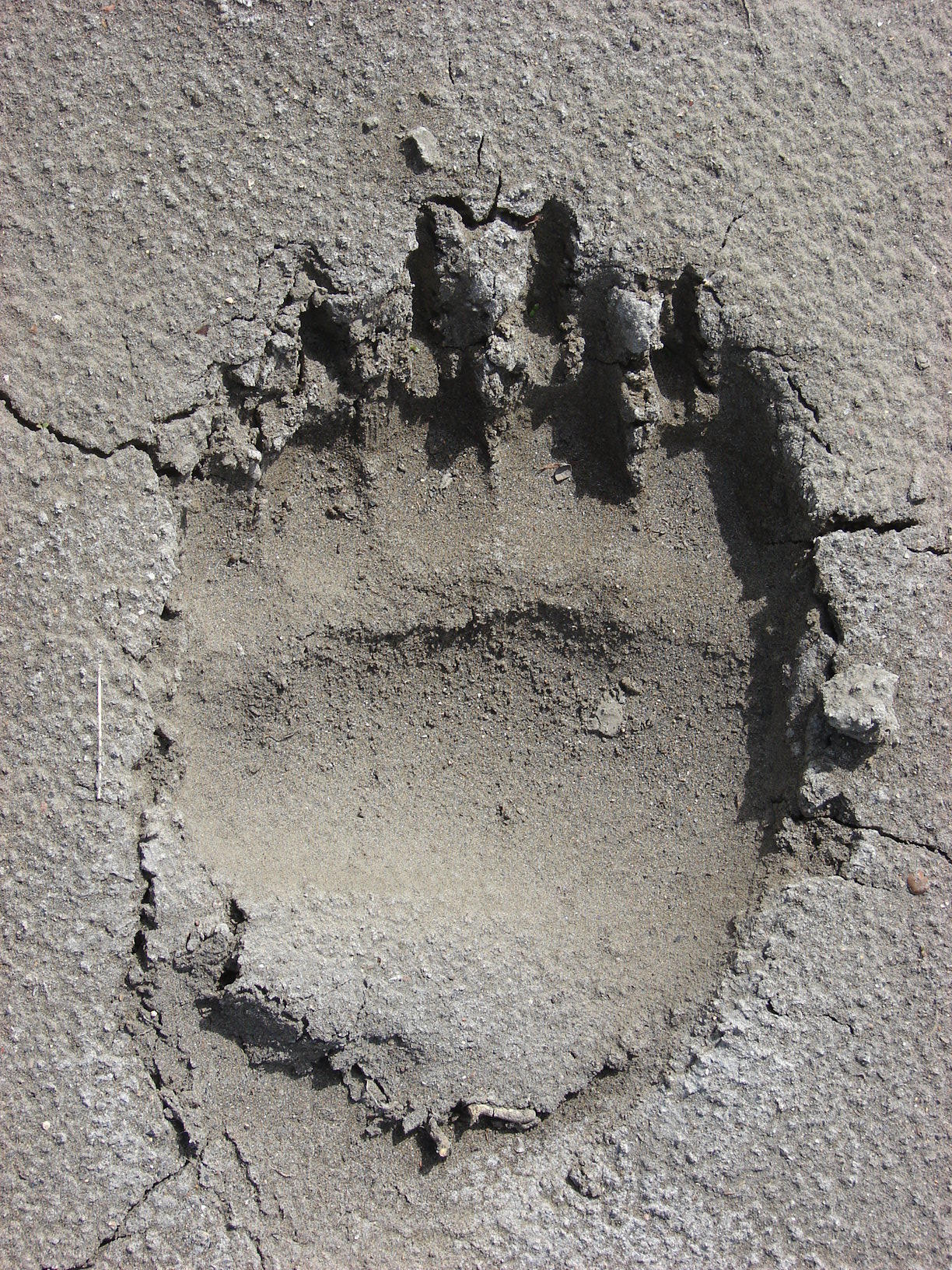
Grizzly Bear front and rear paw

More wolf tracks

Stunning Scenery
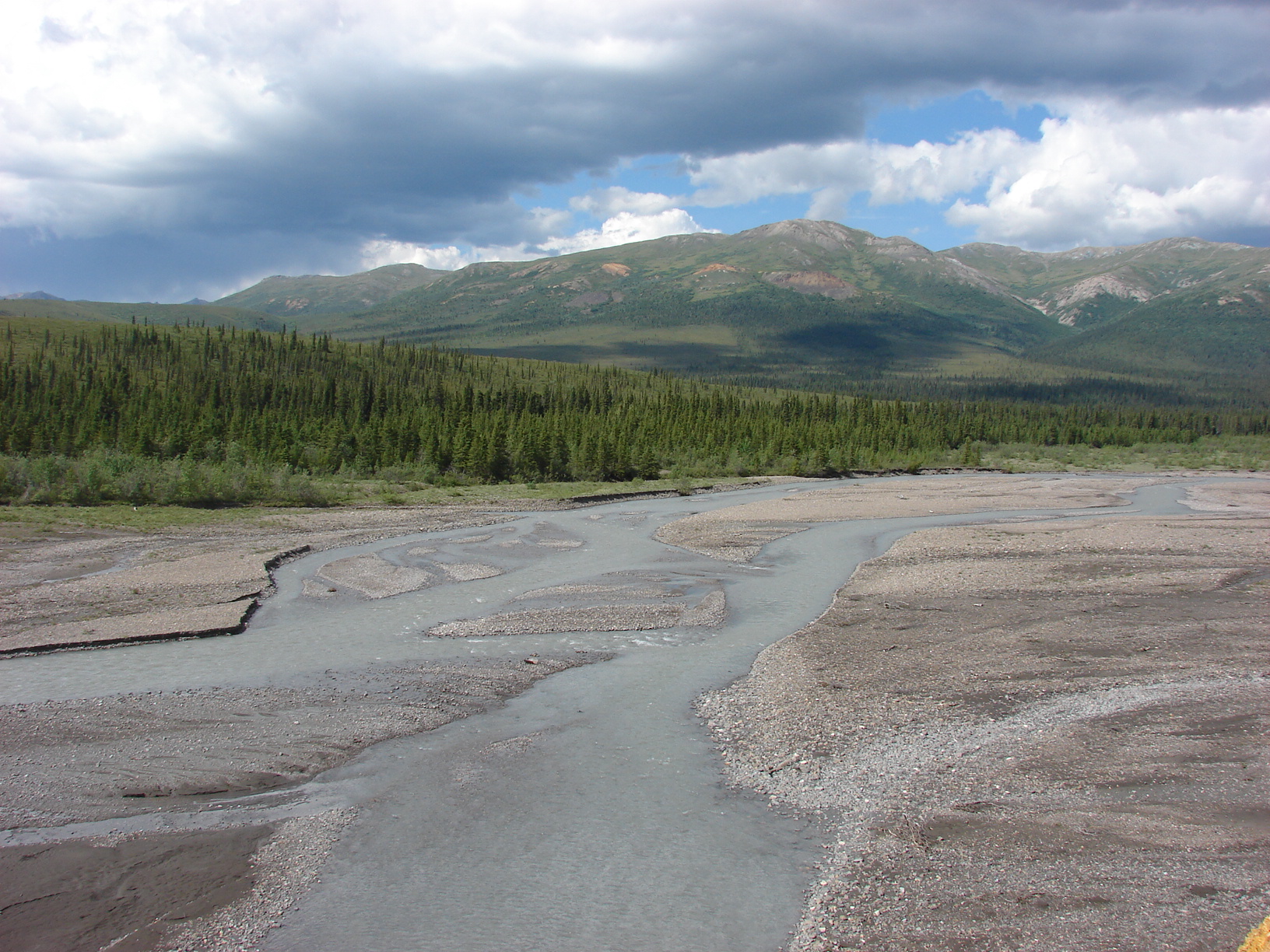
More stunning scenery
Denali National Park-Part 3 will be about our Shuttle Bus ride out to Wonder Lake and back and how it reminded me of an African safari, so stay tuned.
Denali National Park-6 million acres of gorgeous. Part 1
Yes, that’s right folks, Denali National Park consists of 6 million acres of nothing but gorgeous. Having a hard time visualizing just how big 6 million acres is? How about nearly 9,500 square miles. Does that help? No? Well, picture the State of Massachusetts and know that Denali NP is bigger. No lie. I understand it to be about the size of New Hampshire. Now that’s what you call a National Park!
Of course it is known for being home to the tallest mountain in North America. Formerly known as Mt. McKinley, the mountain is now (or I should say again) called Denali, which is the original Athabascan name for it meaning “the high one”. Denali stands 20,320 ft tall and has an 18,000 ft vertical relief, which rivals that of the more famous mountains like Everest (not the elevation, but the vertical relief). The Park is also known for its diverse wildlife. There are over 1,500 plant species, 39 species of mammals, 167 bird species, and 10 of fish (no reptiles). Suffice it to say, there is an awful lot to see and I haven’t even mentioned the Glacial Features or Geologic Formations, which are both beautiful and fascinating. I think I could easily and happily spend a lifetime in the Park and still not come close to seeing it all. To learn more, you can visit the official website, www.nps.gov/dena
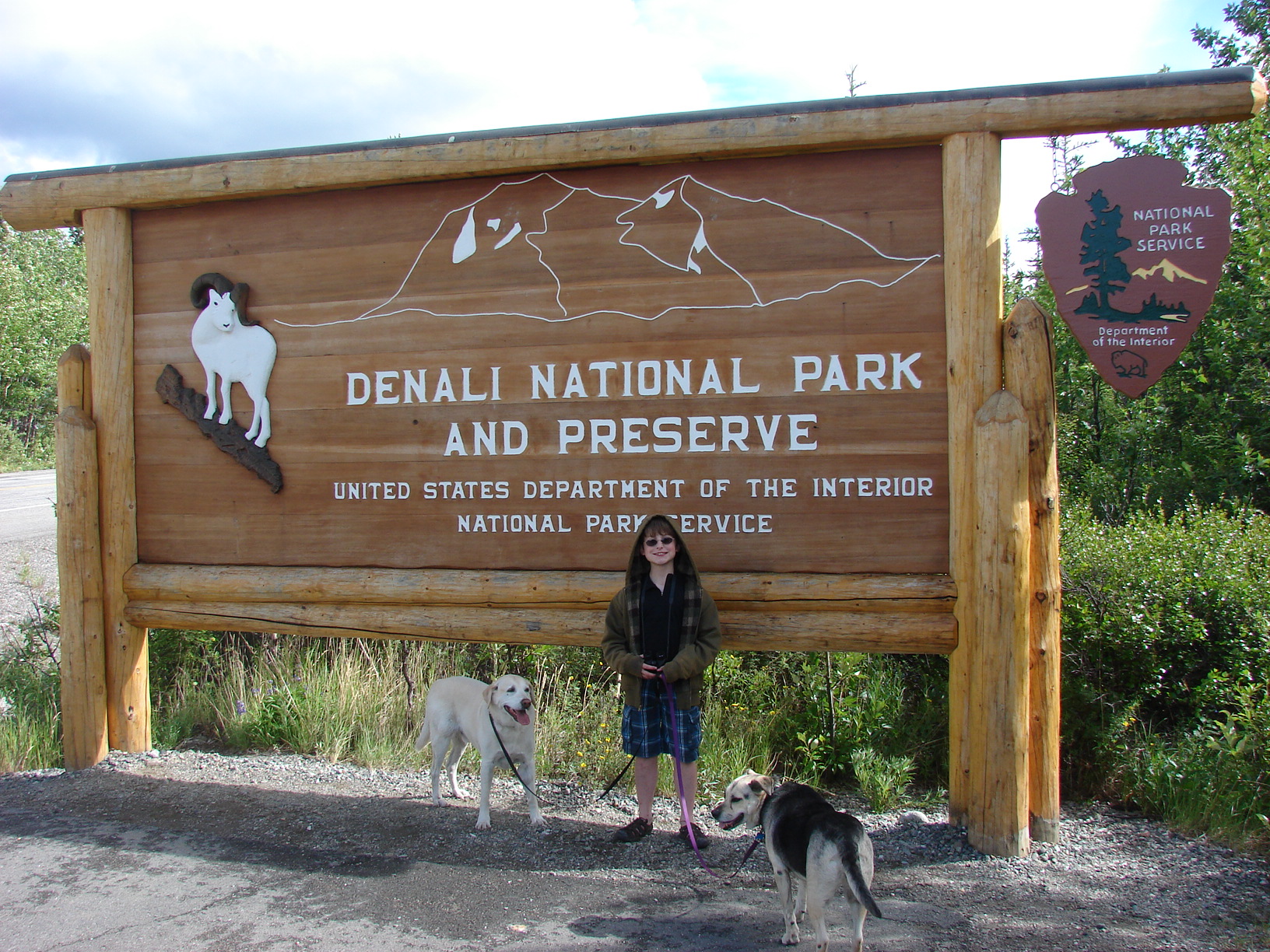
Now on to share our 4 day glimpse into this great park.
Aaron, Misty, Mosely, and I left Anchorage last Sunday morning and arrived at the Riley Creek Campground about 5 hours later. Fortunately the first real trip in Dora was pleasantly uneventful. I’m becoming an excellent RV driver. (cue music from the movie, Rain Man) The Riley Creek Campground is located just inside the entrance to the Park and was our home for the first night. After checking in and setting up our little spot which involved backing up all 36.5 feet of Dora, we explored the campground, took a quick hike with the dogs, fixed mac and cheese, salad, and brownies for dinner (we had all of Aaron’s favorites on this trip) and went to the Ranger talk on Shadow Cats otherwise known as Lynx. Just lovely. I’ve got to tell you, this is the first time I’ve “camped” in an RV and hands down, its got sleeping on the ground beat by a mile.
I slept most soundly and comfortably in my very own bed with memory foam topper, flannel sheets, and down comforter and upon waking I turned on the furnace to chase away the morning chill. While sitting comfortably on the padded dinette seat waiting for my coffee to brew, I faced the difficult decision to fix eggs, pancakes, cereal, fruit and yogurt, or oatmeal for breakfast. I did mention we were camping, didn’t I? Ha! I’ll never look at my tent the same way again.
After breakfast, which I think ended up being peanut butter toast with bananas, coffee, and hot chocolate we packed up, stopped at the nearby Mercantile to dump our tanks and fill our fresh water tank, stopped in at the Visitor’s Center to have our National Parks Passports stamped, and headed up the Park Road…destination Teklanika Campground…mile 29.
I’ve realized as I’m typing this that I neglected to take pictures of either of our campsites. My apologies. I’ll try to remedy this next time Dora and I go “camping”.
The Park Road is 85 miles long and takes you from the Park Entrance out to Wonder Lake. Private vehicles are allowed only to the Savage River which is at mile 15. Beyond that point the road becomes gravel and you must have a campground pass to take your own vehicle further or be aboard one of the many Park Shuttle Buses. Since we had a campground pass, we proceeded to the Teklanika River Campground which as I said is located at mile 29 and is the furthest campground from the Park entrance. Once there, we chose our spot, backed in, and got set up for a 3 day stay.
I’ll end Part One here, but will entice you to stay tuned with the list of the animals we saw over the next couple of days and a few photos from our hike along the Savage River whose geology is most intriguing. It is quite complicated, so in brief let’s just say that the rocks in the photos started out as sediment in an ocean that once covered this part of the world 300 million years ago, throw in some molten magma, seriously high pressure, another 600 million years, and the movement of a few tectonic plates…and Voila!
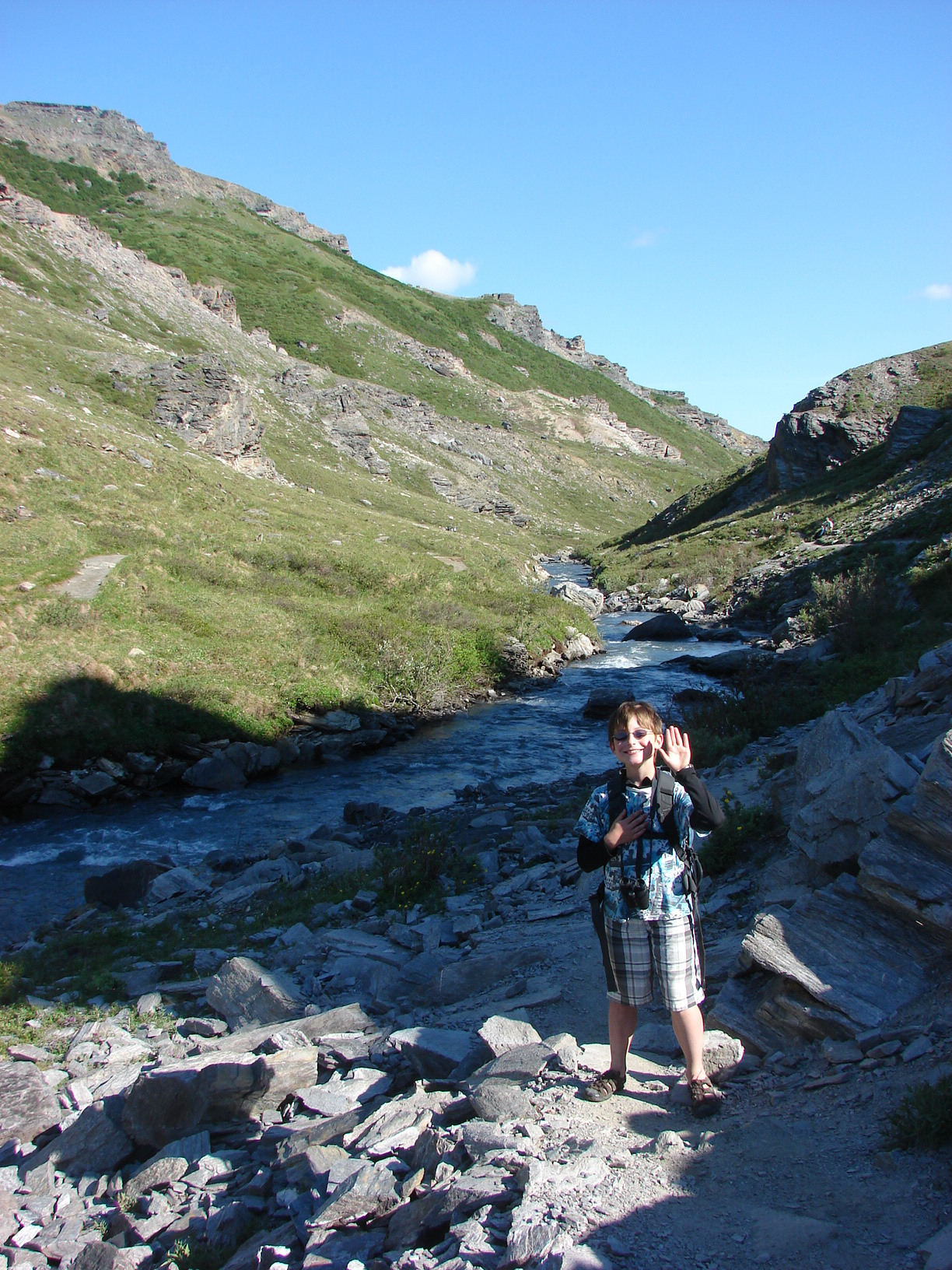


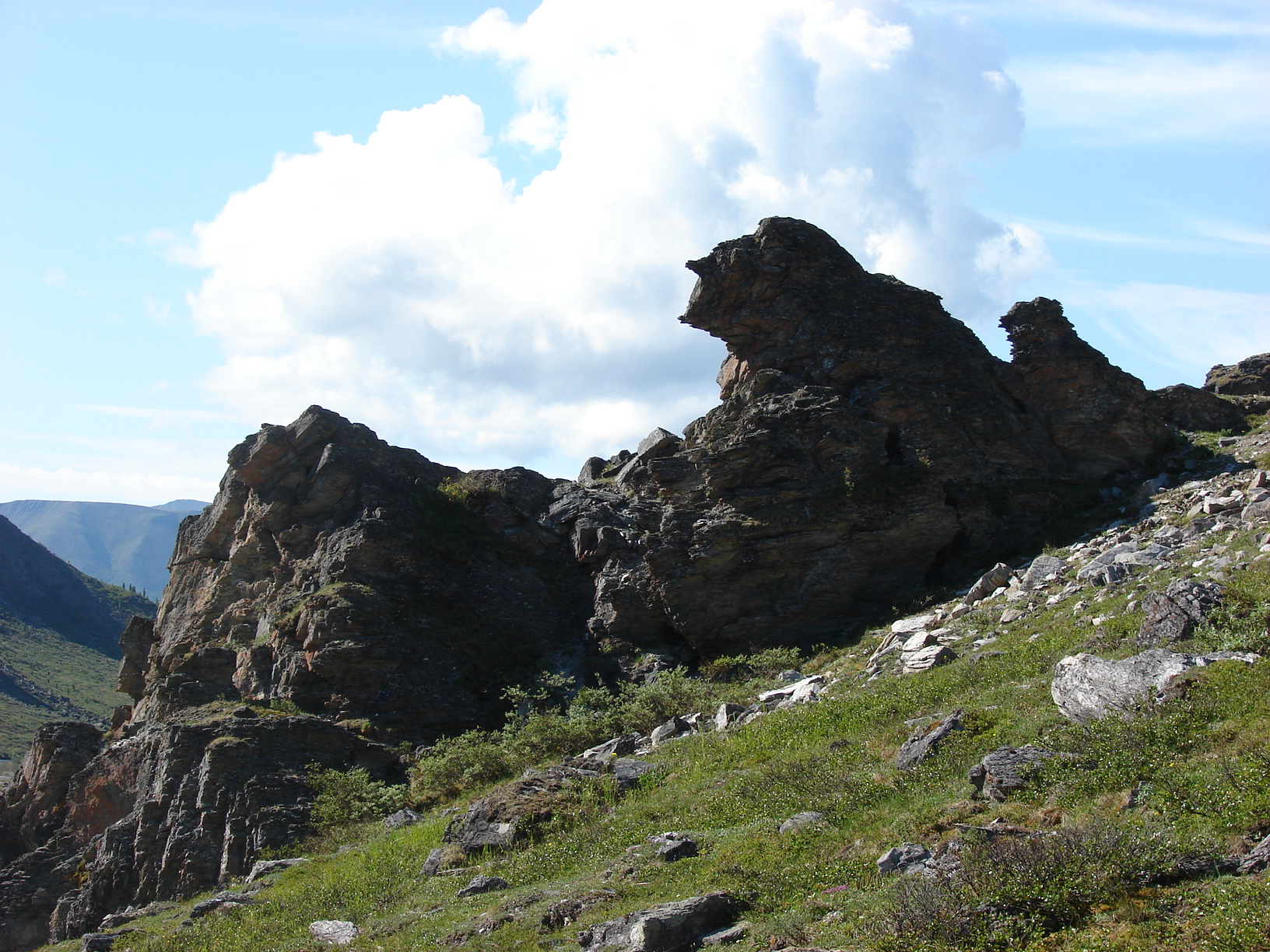
Animal sightings: Grizzly bears with and without cubs, Wolves with and without pups, Dall Sheep with and without kids, Moose with and without calves, Caribou, Snowshoe hare, Arctic Squirrel, Golden Eagle, Gyr Falcon, Hoary Marmot, Porcupine and The Alaska State Bird…..Mosquitos.
 Alaskamarge Travels